Parrotia persica
Pleached Persian Ironwood
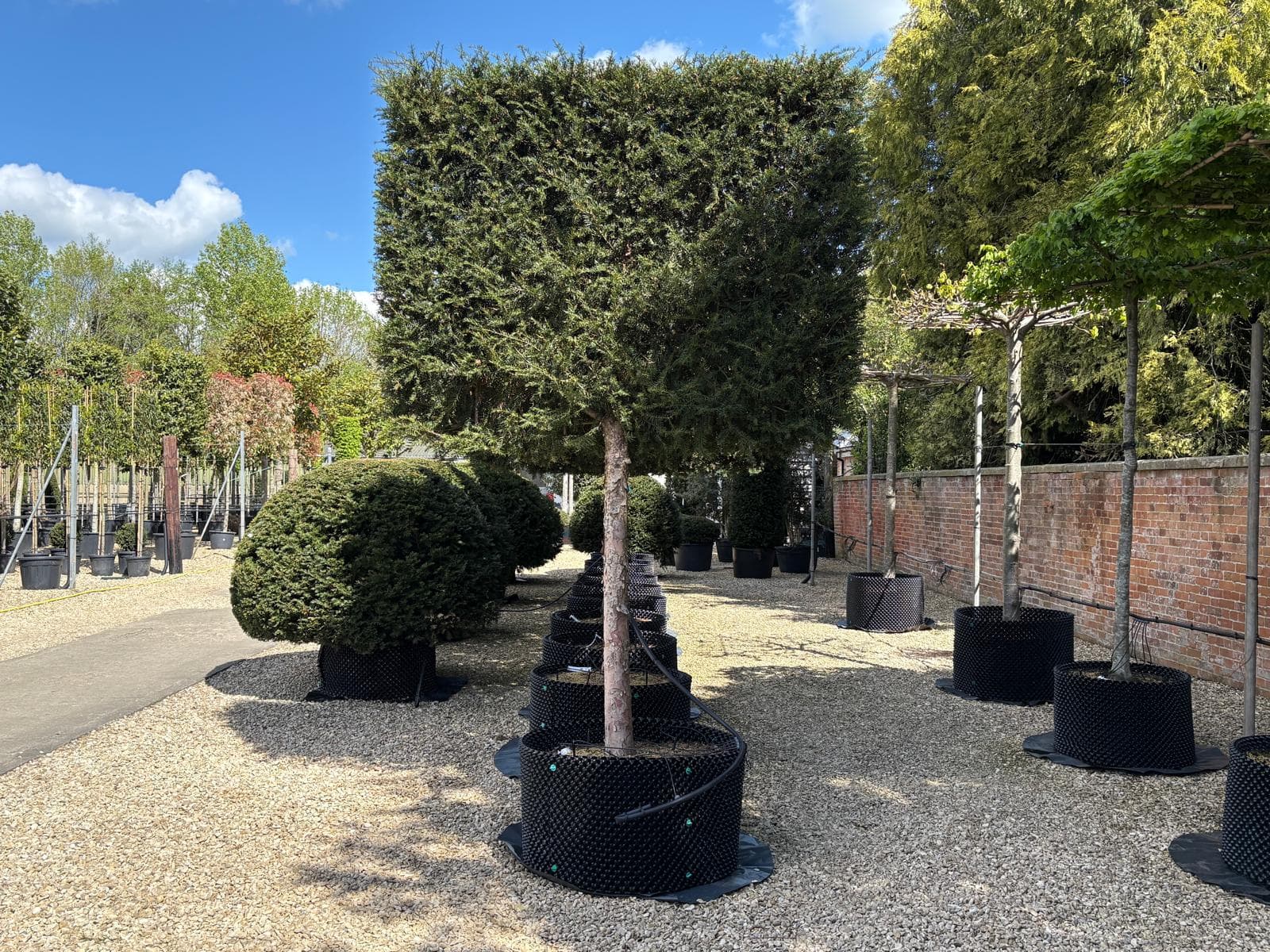
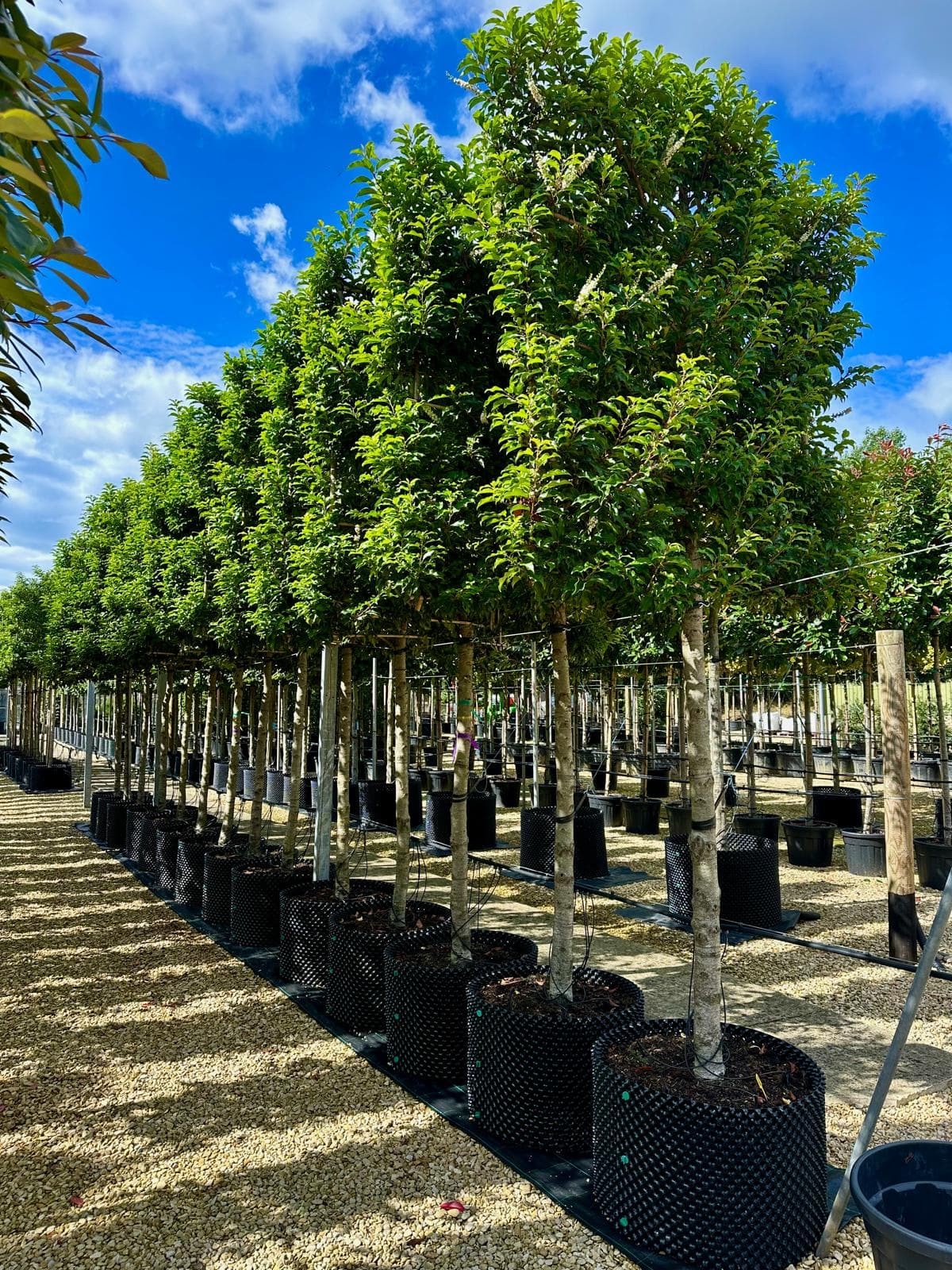
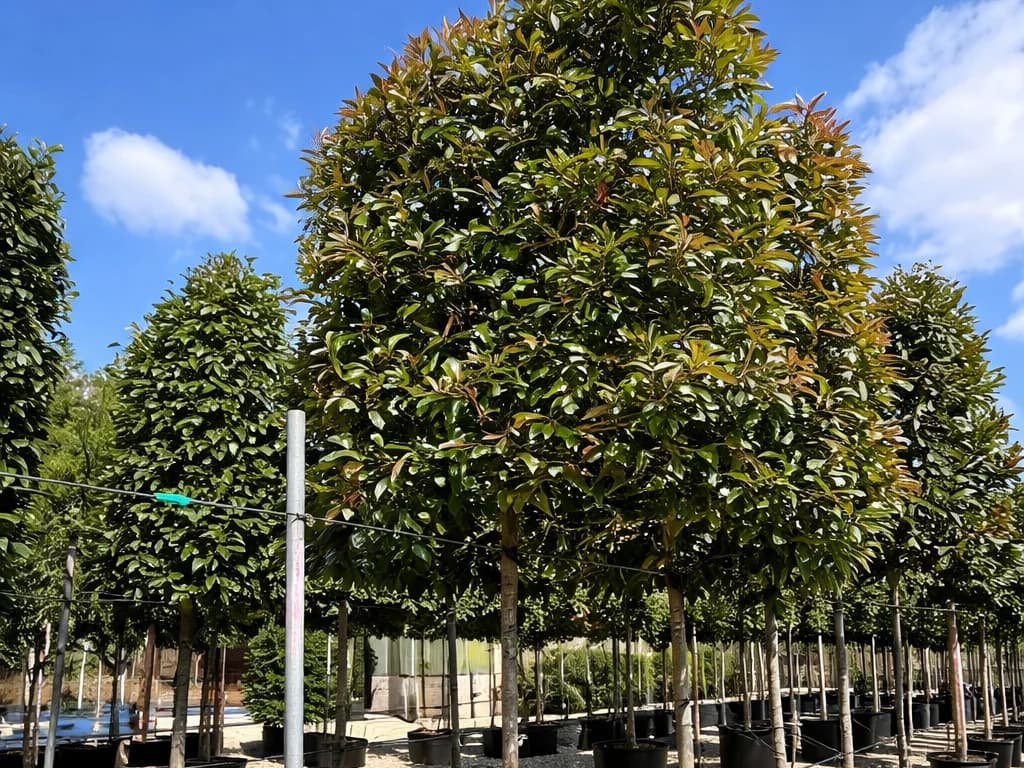
A slow-growing architectural tree, Parrotia persica delivers outstanding autumn colour in shades of yellow, orange and red-purple, with exfoliating bark for winter interest, deciduous pleached trees don't come much better.
or call us directly
01672 861883Product Gallery
Unlike Purple Beech whose leaves change from purple to green, the Persian Ironwoods leaves start off dark green and change to dark red/purple as the season progresses. A small to medium sized tree ideal for training.
Deciduous
High and low pleached options
Also available as Box Head and Multistem Trees. Please get in touch for more options.
Stem girth from 12-14cm up to 25-30cm, occasionally bigger available but they need booking in advance
Various stem heights and frame sizes available
Trained on frame in pleached form for 1-6 years in some cases even longer
Pleached Persian Ironwood is available as freshly pleached trees while stocks last
Available in pots and containers, cocoa rootball or rootball
Nationwide delivery service by articulated lorry, smaller vehicle by prior arrangement
Browse our current pleached tree stock, selected for structure, form, and maturity
View Stock & PricesPersian Ironwood – Parrotia persica (Hamamelidaceae)
Ornamental tees don’t come much better than the Pleached Persian Ironwood. Its ability to offer interest through all seasons cements its popularity with garden designers and landscape architects alike. It is native to Northern Iran and areas around Southern Azerbaijan and the Alborz mountains.
First documented by a German naturalist Carl Anton von Meyer in the 1830’s, he recorded the new species as a drought tolerant, small to medium size ornamental garden tree. On finding the tree he would have been excited most by the striking autumn colours and exfoliating bark on older trees. He returned home after having botanised the plant and ever since the tree has found its way into gardens and landscapes across Europe, exciting Garden Designers, Landscape Architects and private homeowners.
A small to medium sized deciduous tree, it grows to 7-10m tall. In its natural environment it is usually found with low level branches close to the ground spreading in an irregular pattern. The crowns tend to be flat topped and spherical in shape. In February/March when other trees show little sign of life, the Persian Ironwood produces a spectacular display of small red flowers on bare stems (usually only on older species). The leaves are reverse ovoid to oval, measuring 6-12cm long and 4-8cm wide, glossy green in colour, gradually turning a rich purple to brilliant red and yellow in the autumn. The tree produces small fruit after flowering in the form of spiked capsules which measure approximately 1cm in length. They are considered non-toxic usually. The bark on young trees tends to be grey to brown which gradually changes as the tree matures. On mature trees the bark is smooth with pinkish brown spots, which flakes or peels to leave tan/golden yellow/pink/green patches.
The tree will thrive in most soil types and it will withstand a short flood but does prefer a well-drained substrate. This tree does not tolerate hard landscaping or paving due to its fine root system close to the surface, so its positioning needs to be considered accordingly. The tree is considered winter hardy and frost resistant so ideal for the British climate. It has also proved to have good resistance to strong winds so viable in all but the most exposed sites. They can be found in all sorts of environments including small and large gardens, open landscapes, large tree containers and roof gardens. Available as specimen trees, clear stem and feather trees, multistem trees, pleached trees and espalier trees, blocks and columns.
Available as rootball plants in the winter months, potted stock available while stocks last and cocoa rootball can be arranged for delivery throughout summer period by prior arrangement. If you are looking for small to medium sized tree, that will consistently produce a striking splash of colour each autumn then this tree must be a serious contender.
Planting advice for pleached trees, Freshly pleached trees, espalier trees and Freshly espaliered trees.
An important consideration when planting pleached or espalier trees in a straight line is the slope of the ground. Pleached or espalier trees look their best when they are planted on flat or gently sloping ground. Doing so will line up the frames and stems and creating effect of one continuous line when viewed at all angles. Even on a gradual slope this effect can be achieved. However, with a slope of more than 10-12 degrees, it may be necessary to step the trees/frames when planting (the frames on freshly pleached trees can be manipulated to account for a sharper slope of perhaps 15 degree if necessary).
To create a good visual effect, it is important to line up the stems and frames (unless you are planting them in a circle or semi-circle). To start off the planting holes should measure roughly double the width of the rootball or pot….
Read our full planting guide here