
Our Collection
Box Head Trees
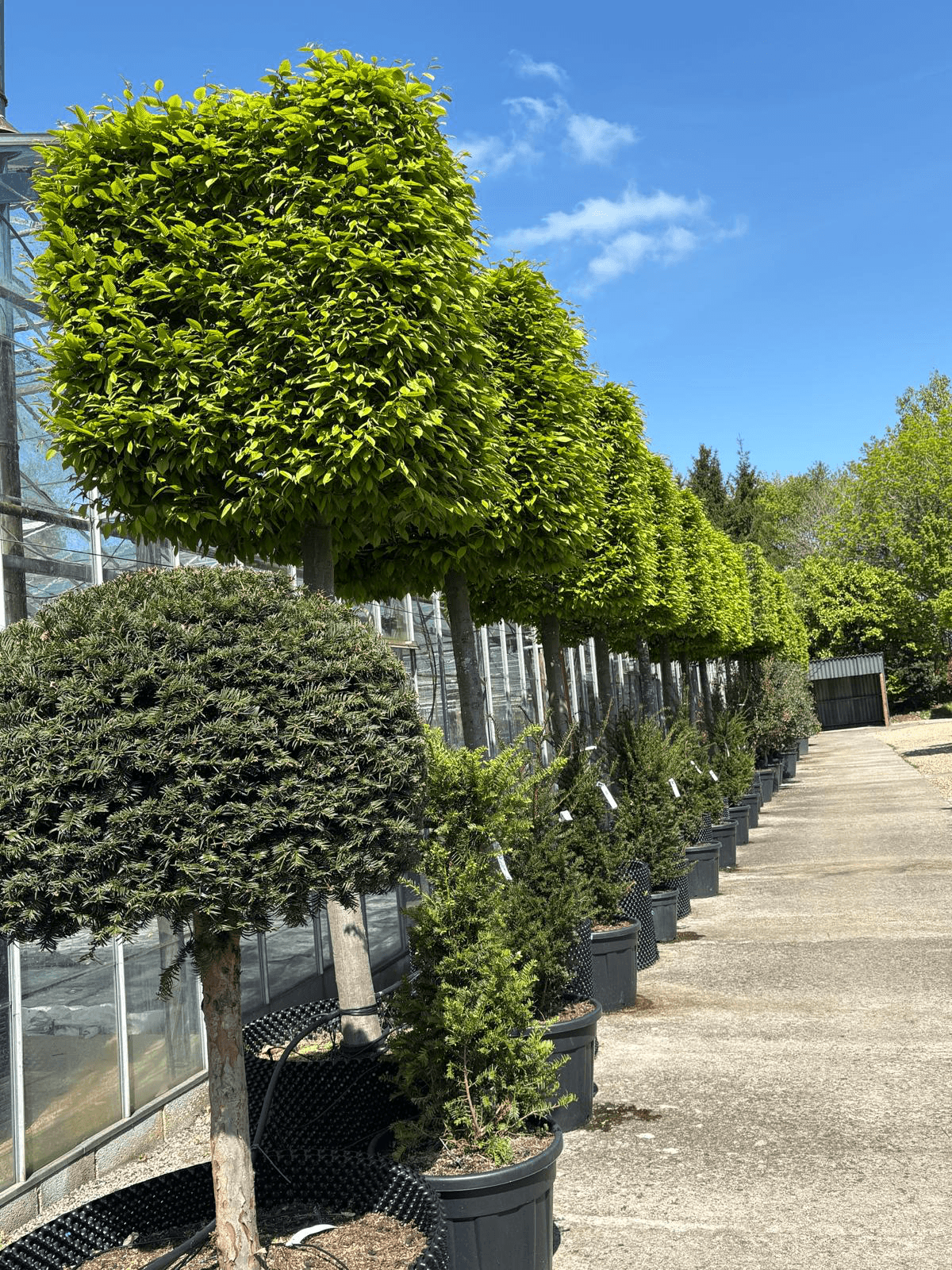
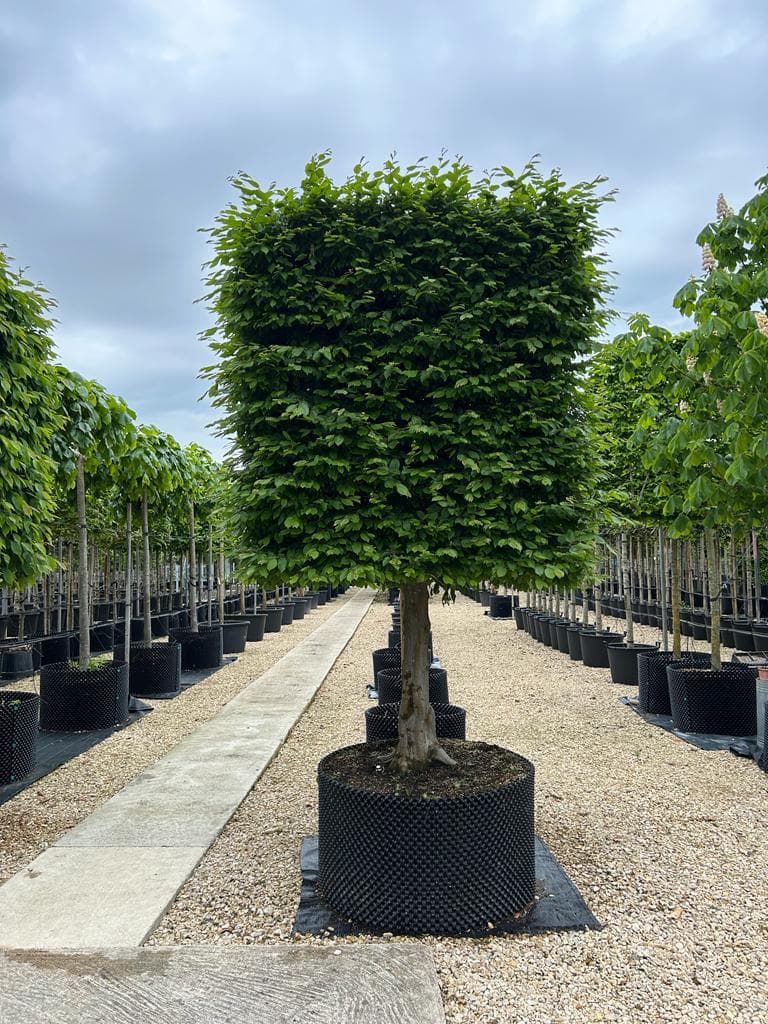
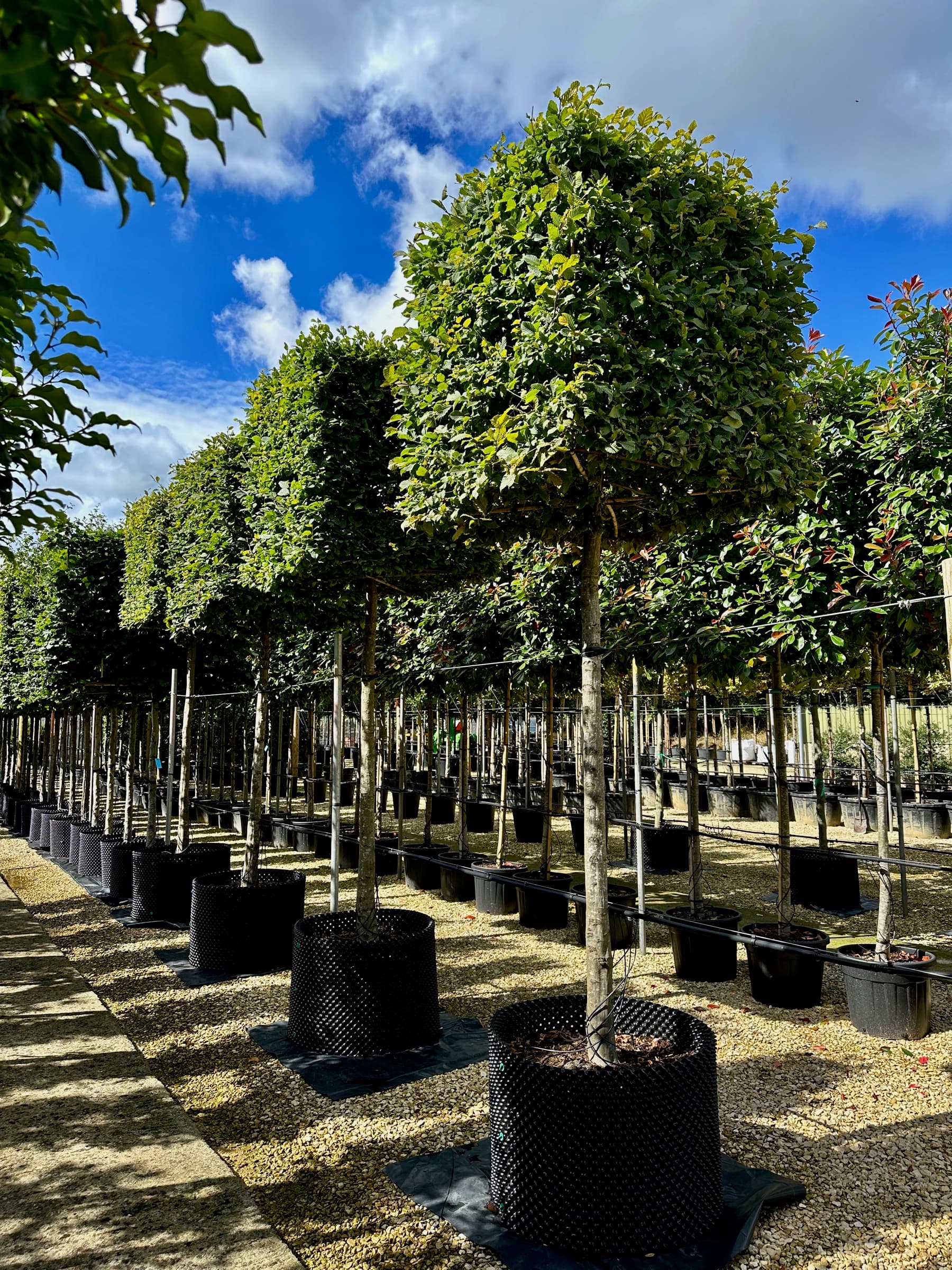
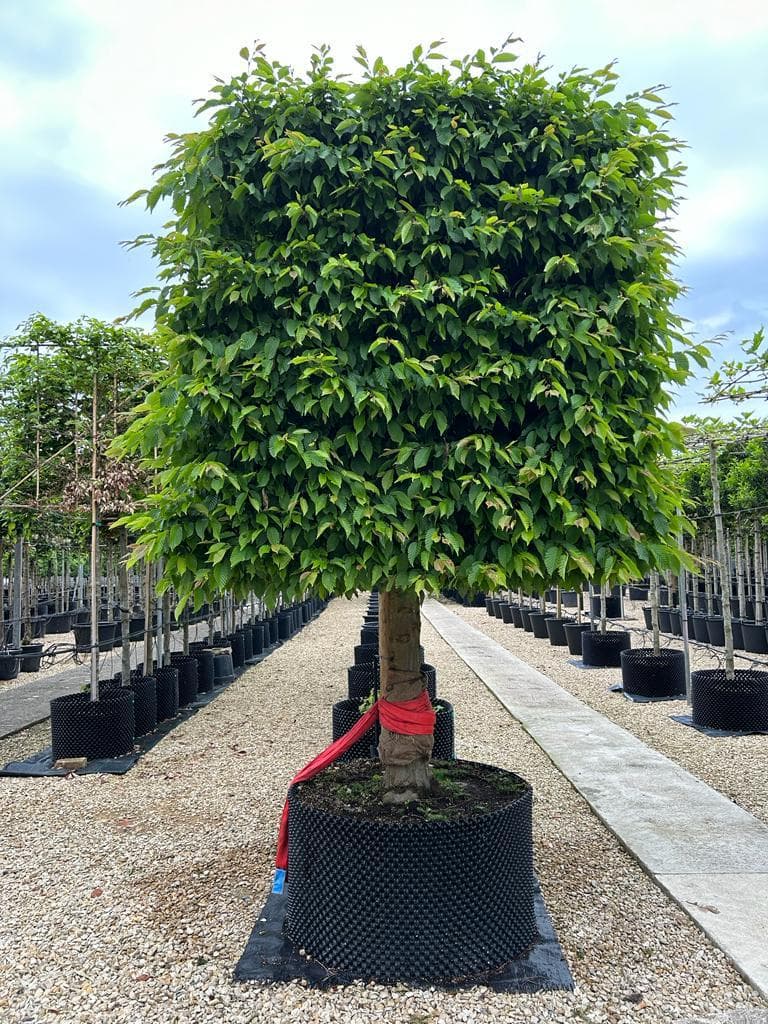
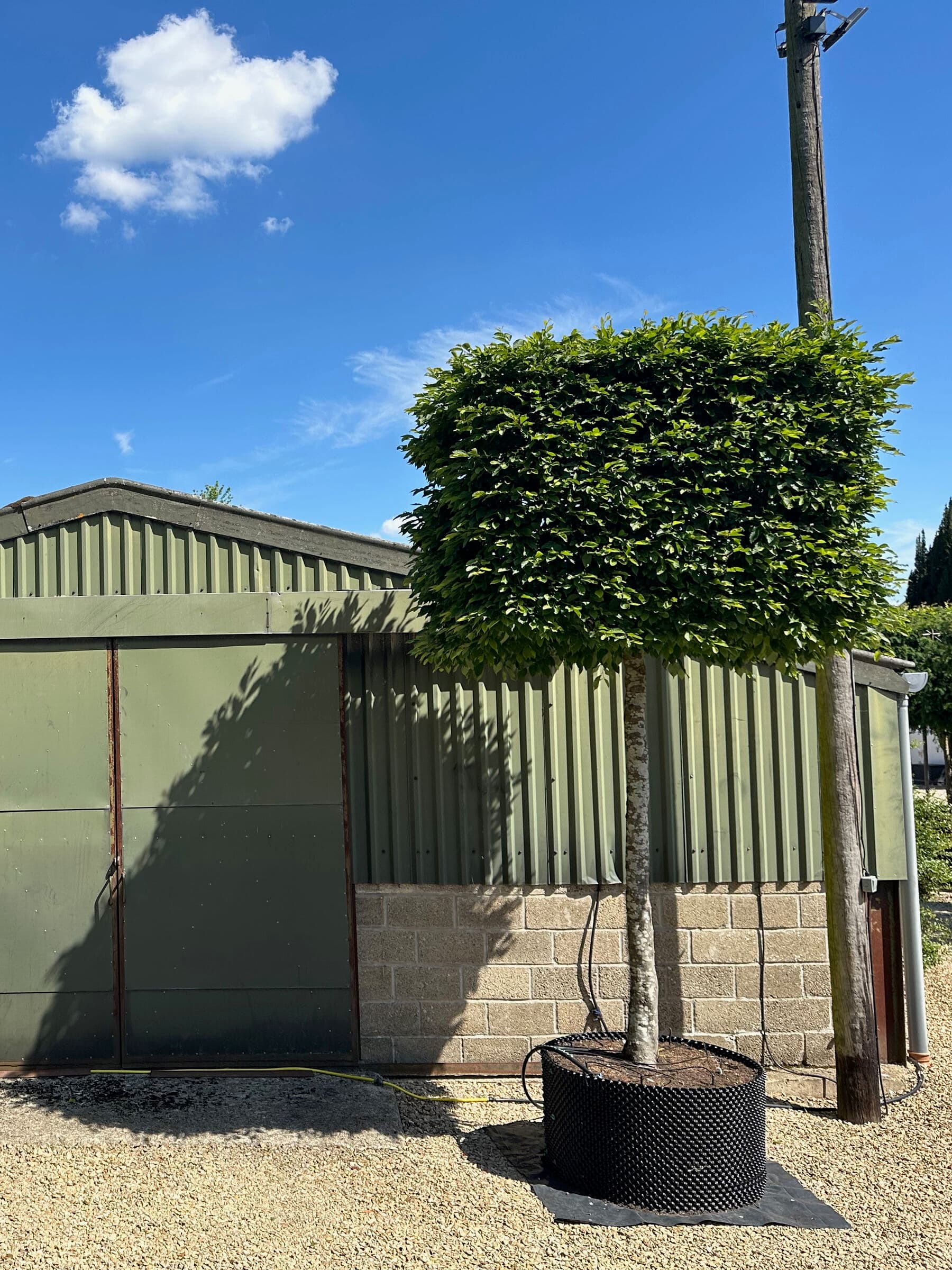
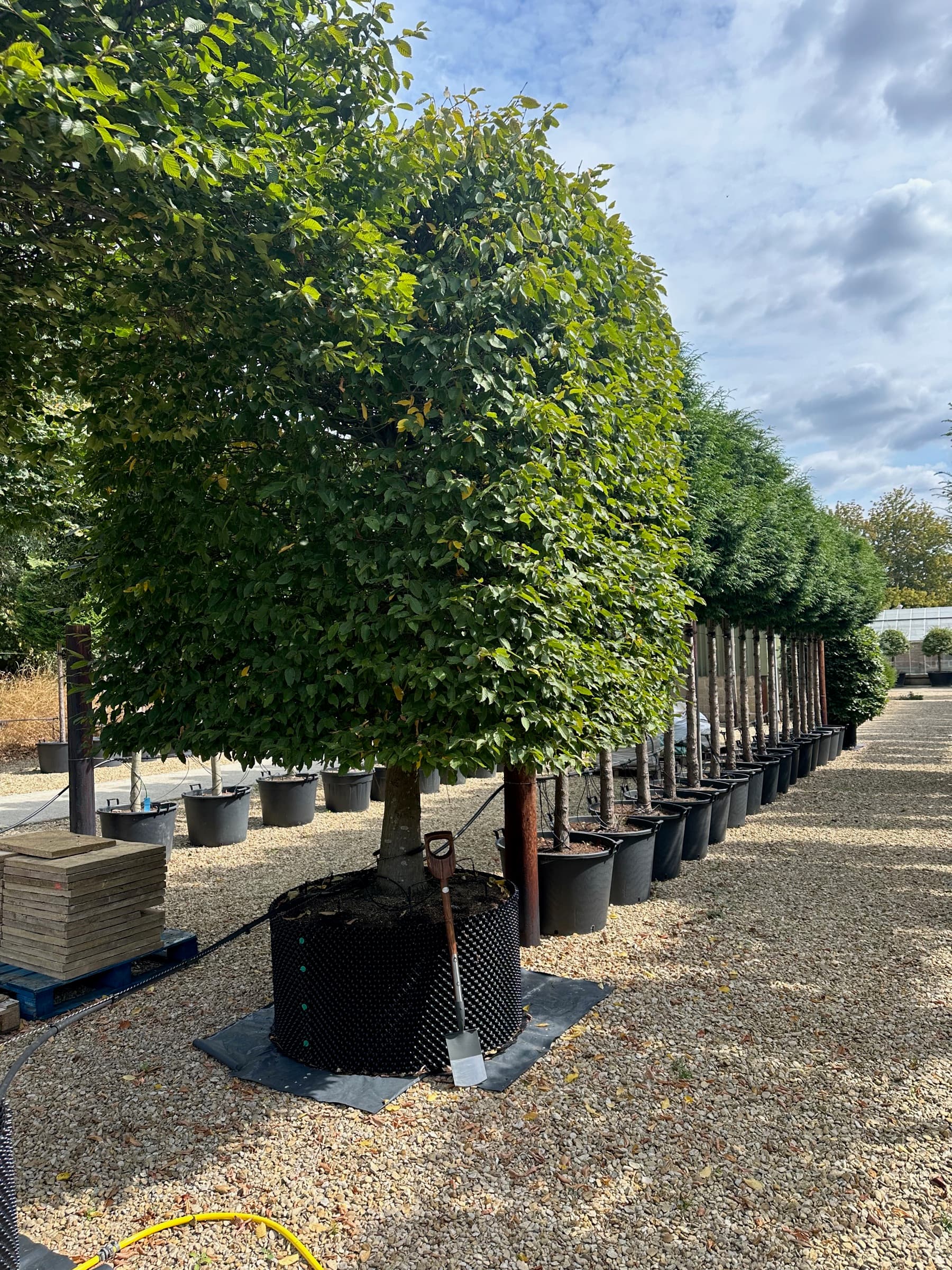
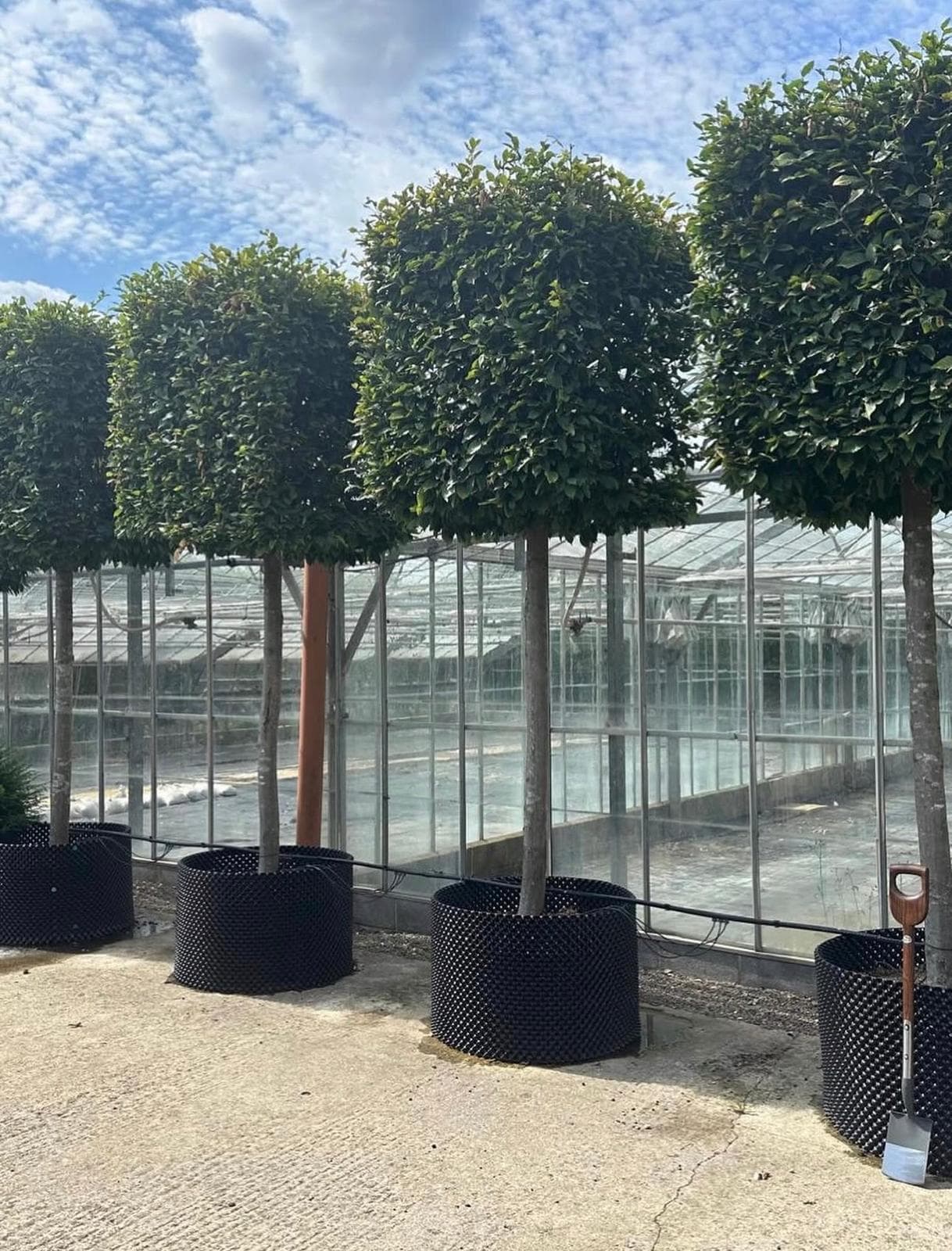
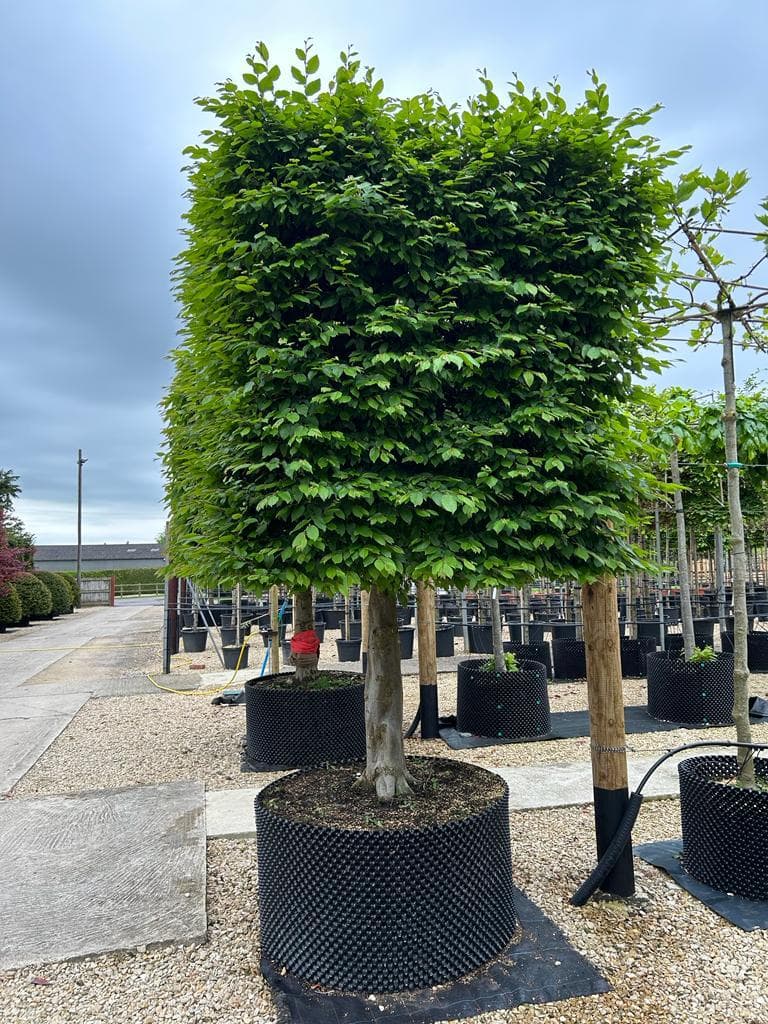
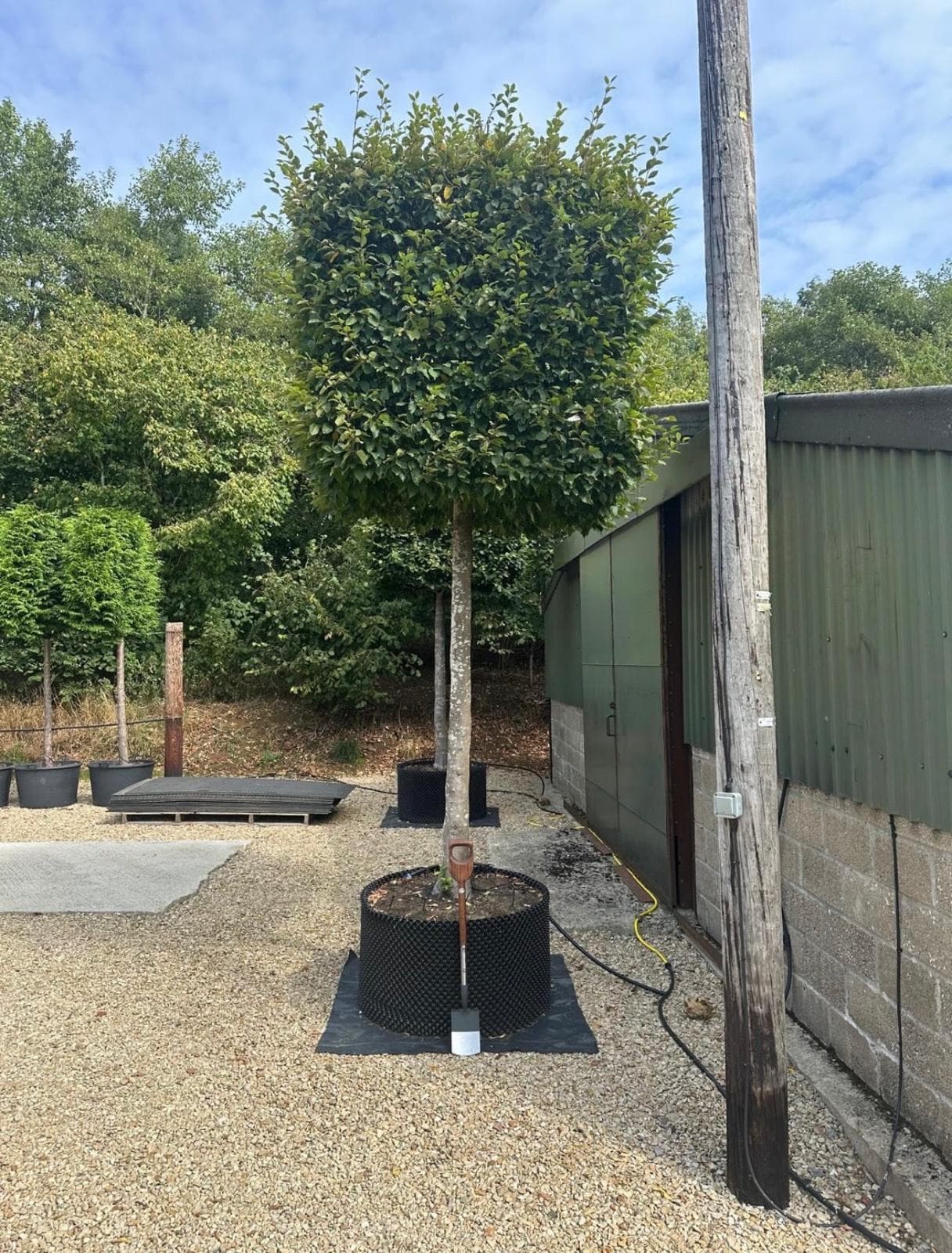
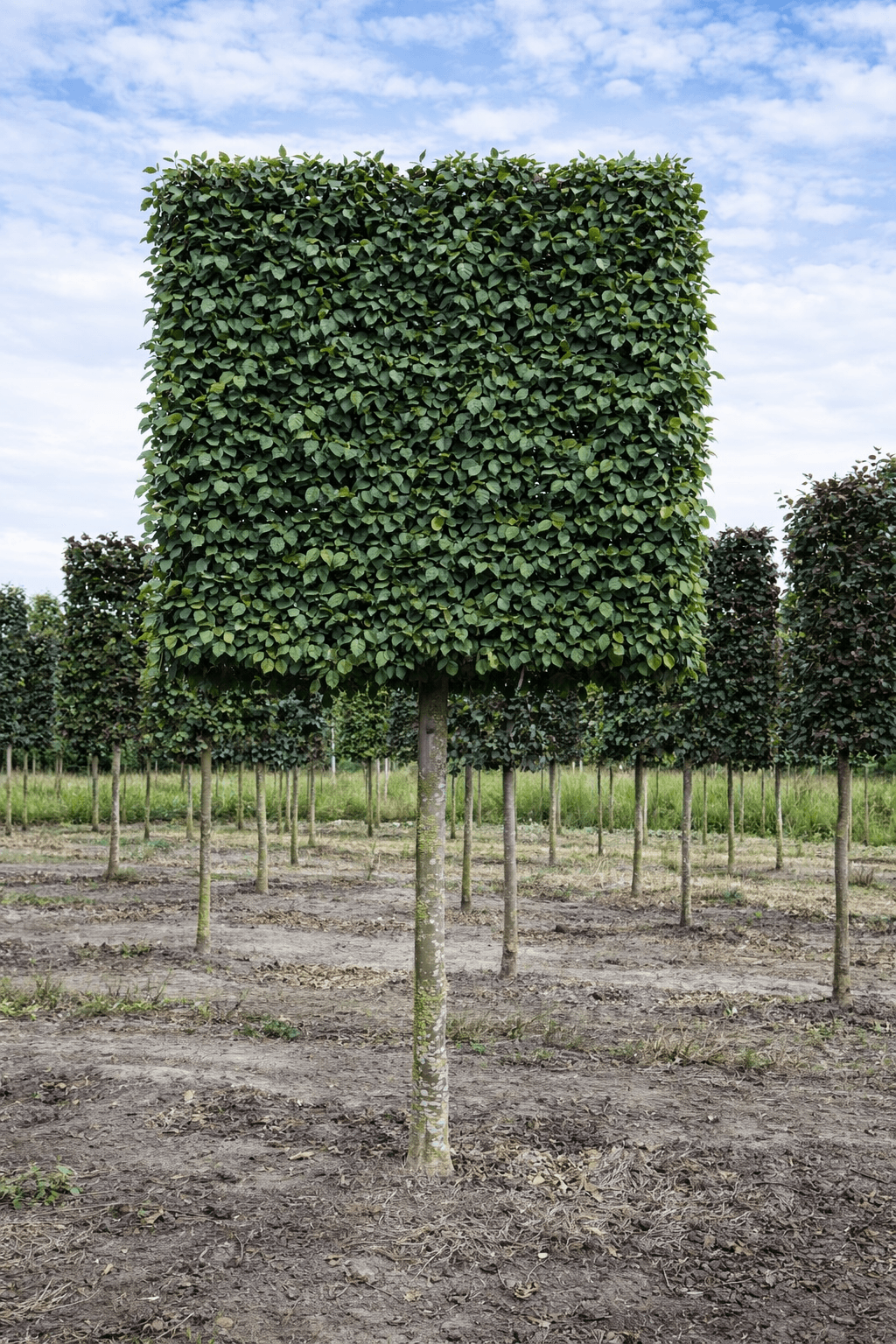
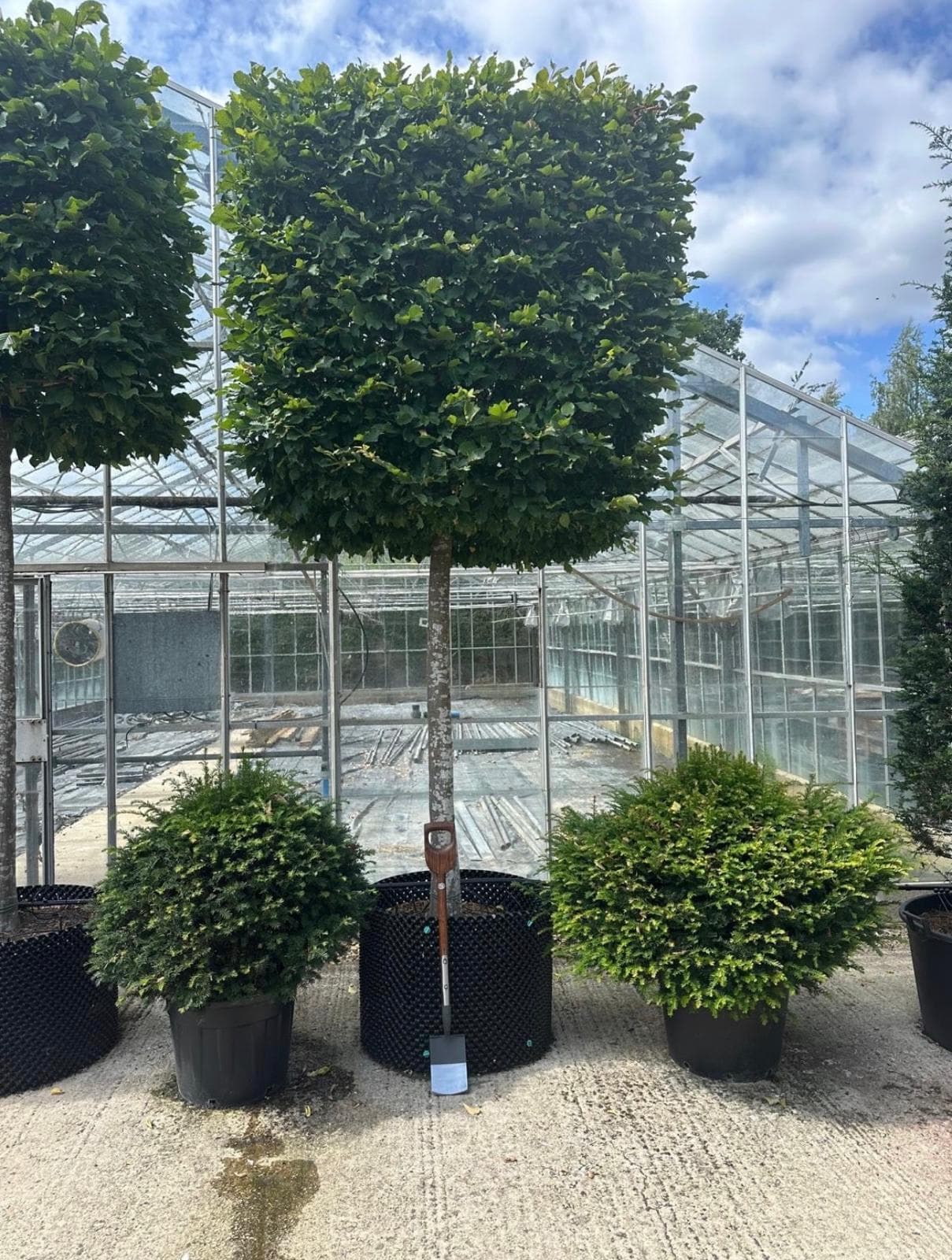
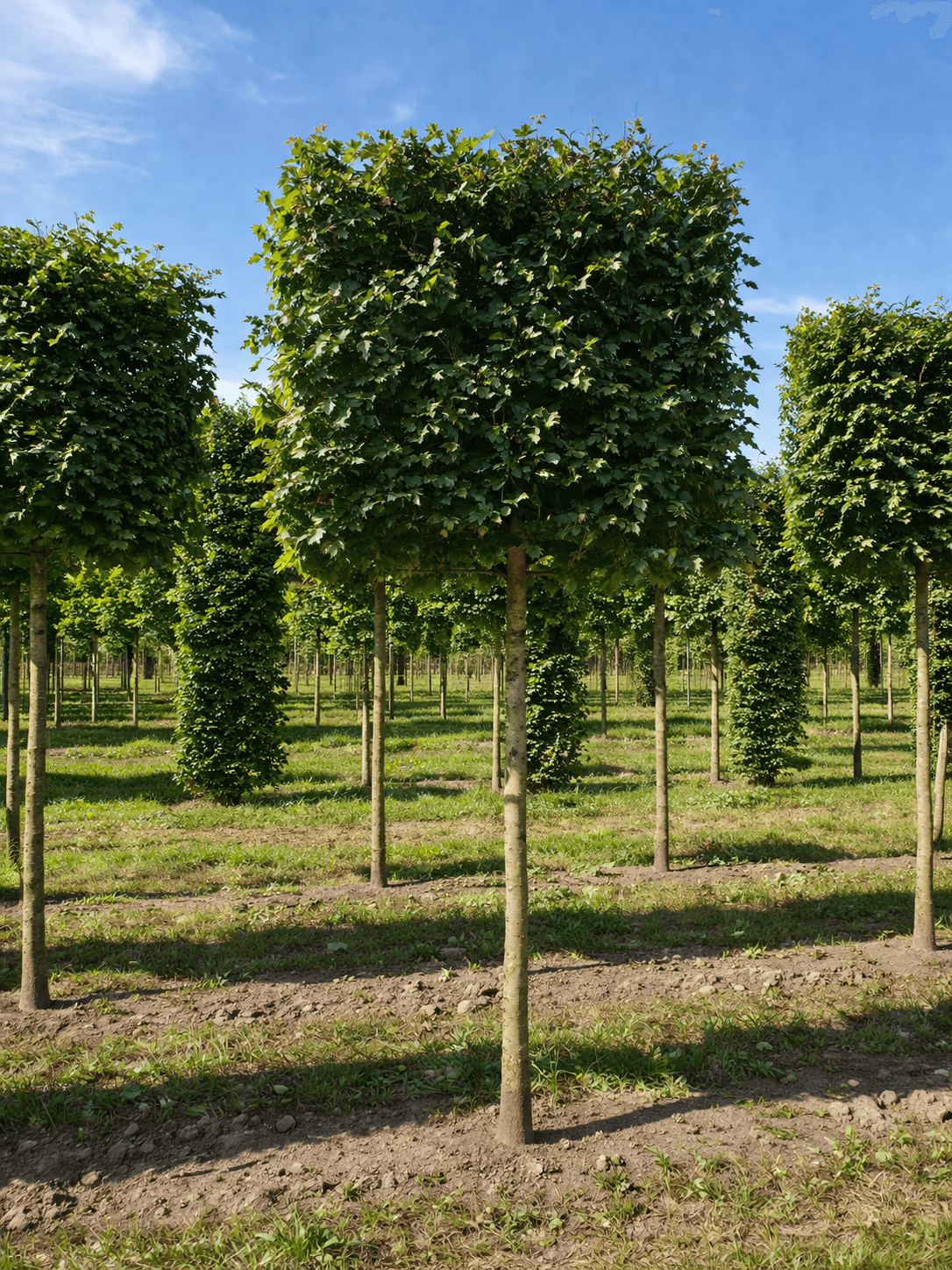
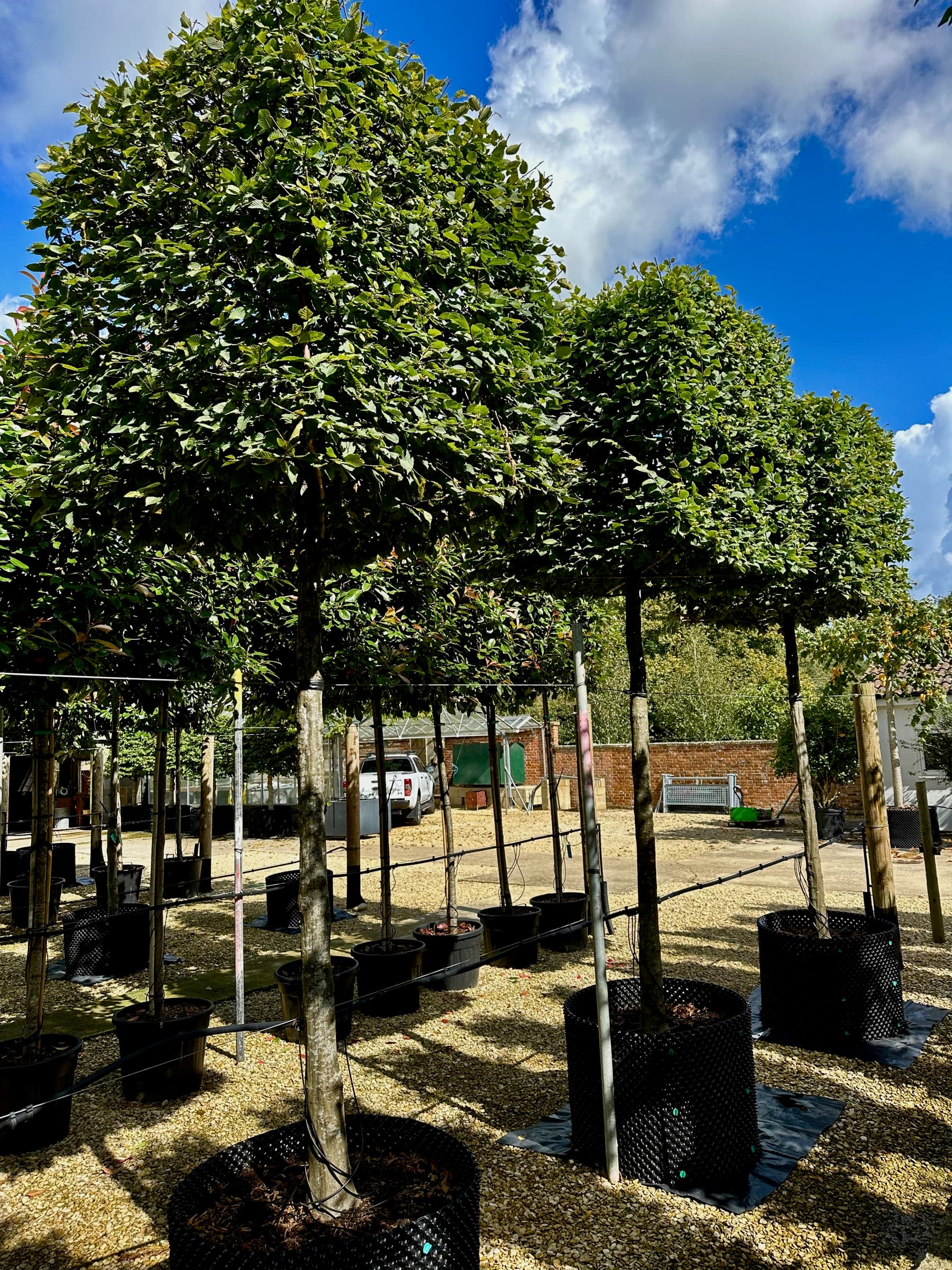
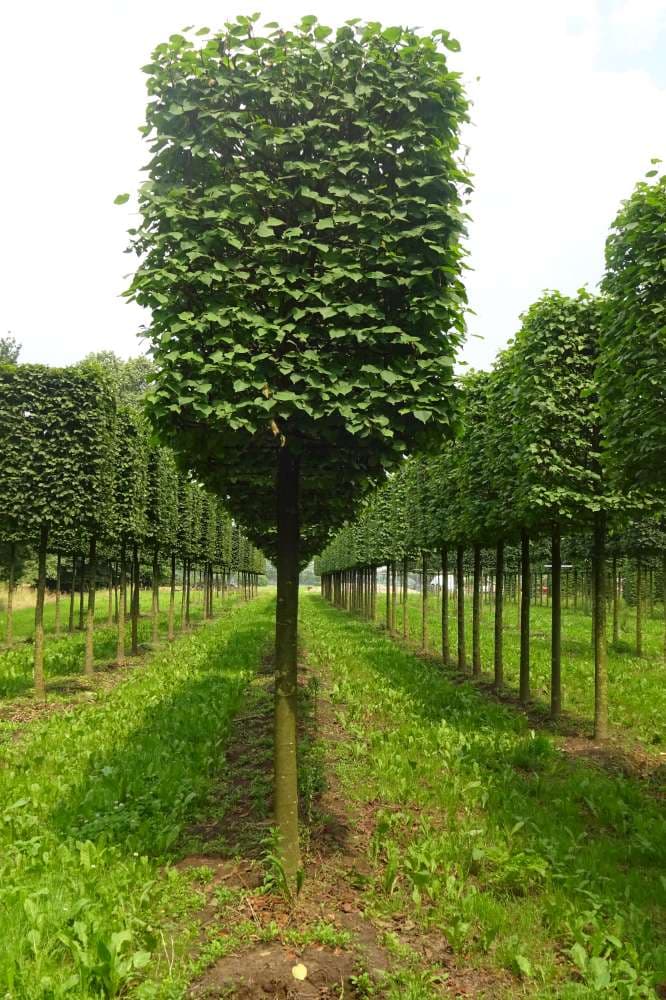
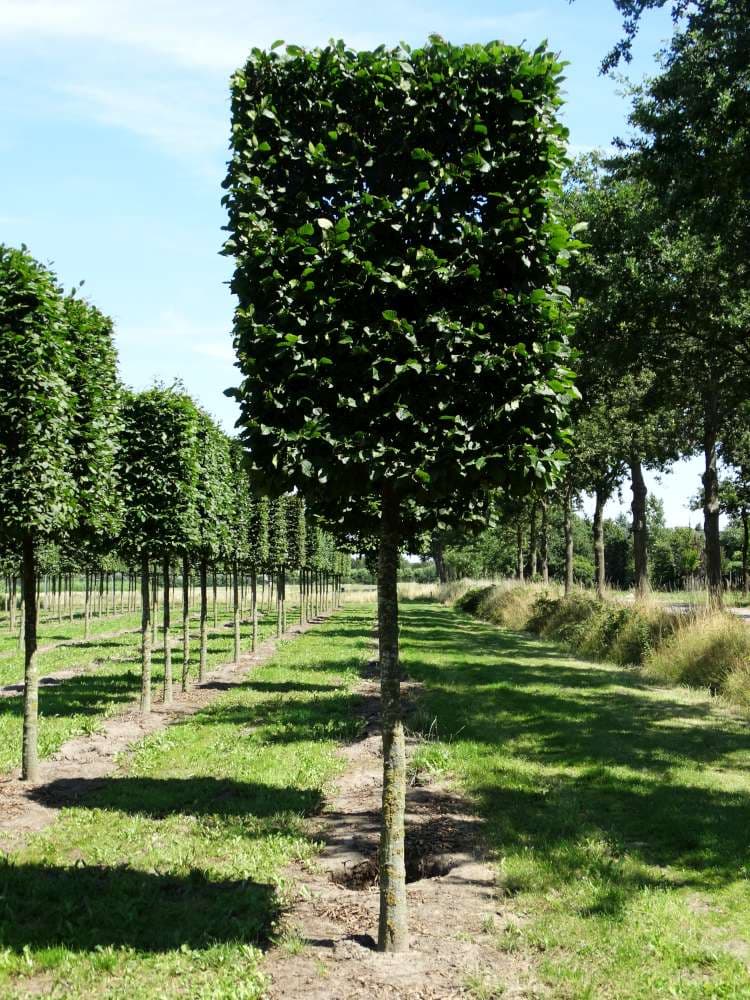
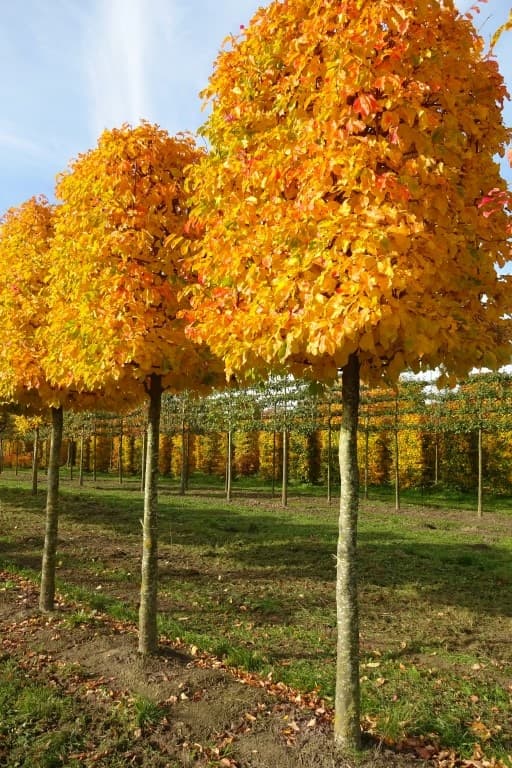
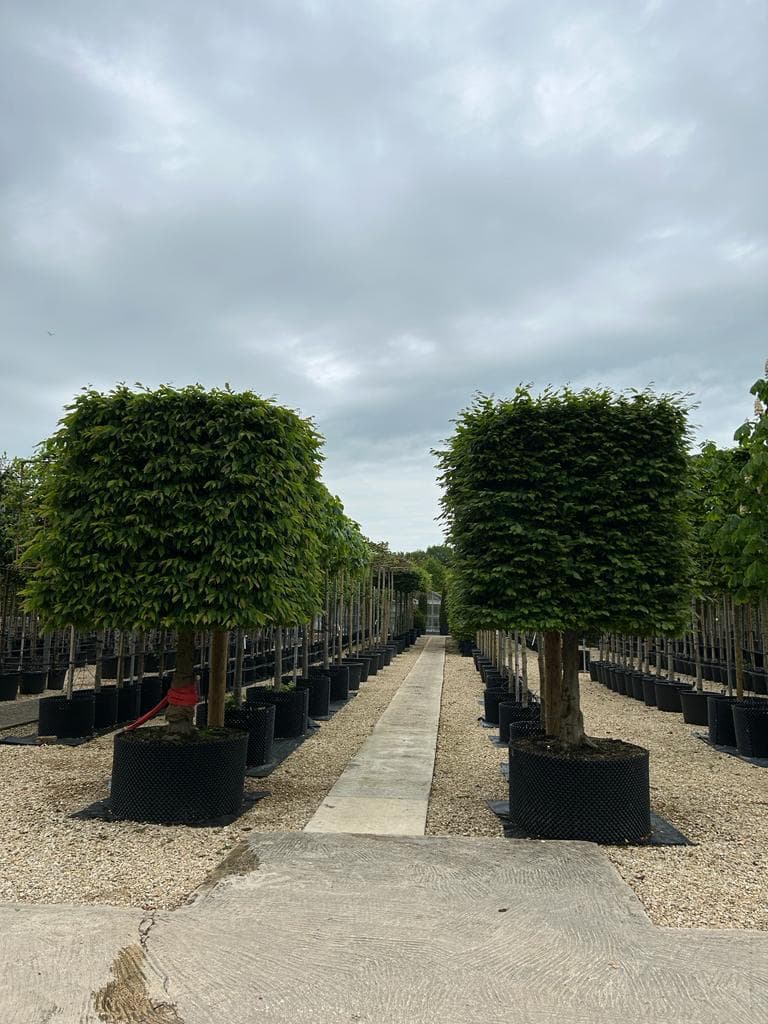
Box head trees, also known as block form trees or box on stem, are architectural trees with clean straight stems and tightly trained cubic or rectangular crowns. Carefully shaped over many years, they are selected and maintained for uniformity, structure and strong formal presence within the landscape.
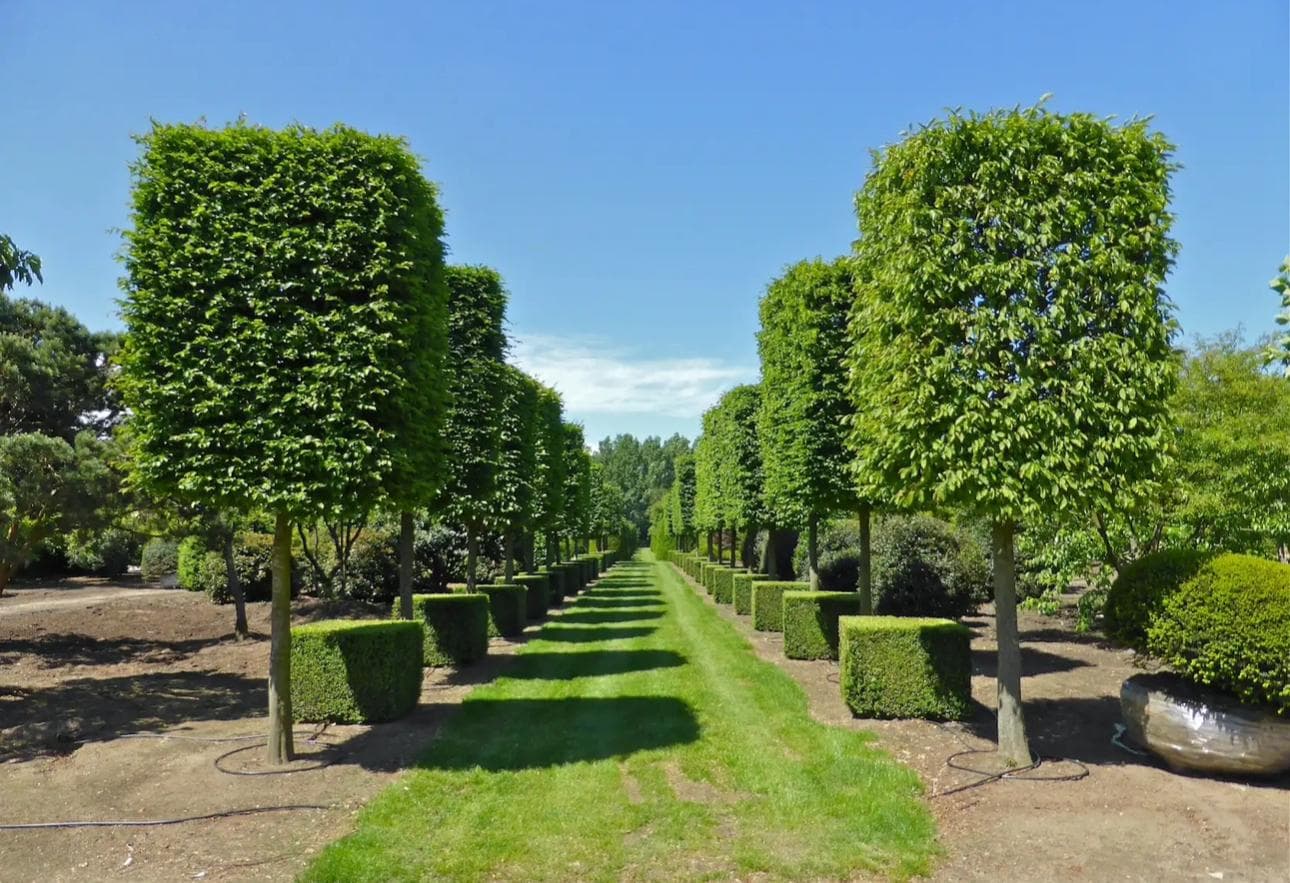
With clear stems that lift the crown above eye level, they are ideal for avenues, courtyards, and formal garden settings where structure and definition are required. Available in a range of stem sizes and as both traditionally trained and freshly formed specimens, they offer consistency in scale, form, and long-term structure.
Interested in our Box Head Trees?
Every project begins with a conversation. Contact us to discuss your requirements. Nursery visits are available on request.
Frequently Asked Questions
Box head trees, also called block form trees, block trees or box on stem, are trees with clean straight stems and a trained cube or box shape on top. They typically feature clean stems of 220-230cm, providing clearance for pedestrian passage when planted in avenues or pathways. Shorter stem options are available but less common.
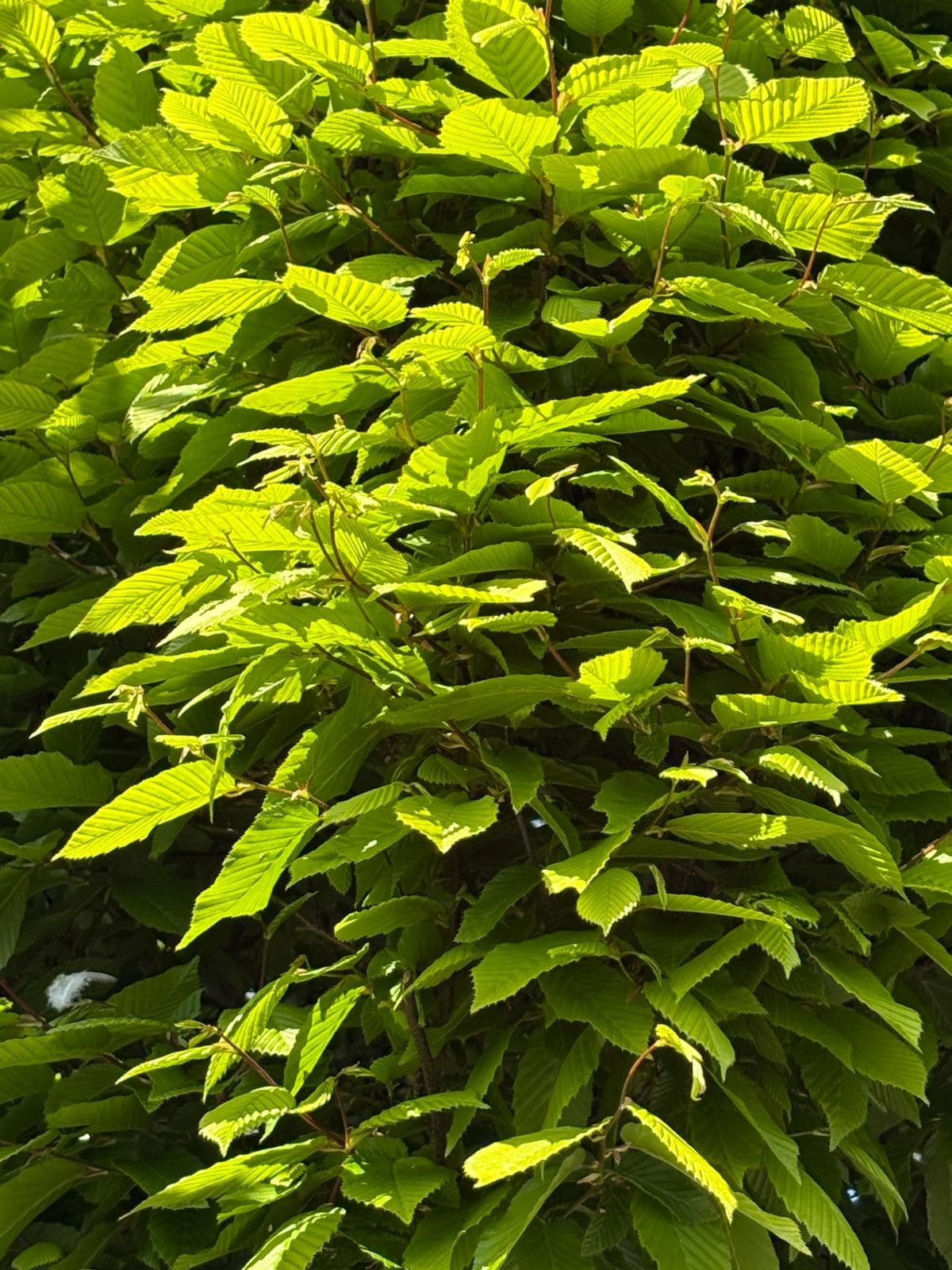
Our primary species are Hornbeam (Carpinus betulus), Beech (Fagus sylvatica) and Copper Beech (Fagus sylvatica ‘Atropunicea’ / ‘Purpurea’). Hornbeam is the most popular. It is easy to grow, thrives in most soil types, and responds well to management. In evergreen, Holly (Ilex ‘Nellie Stevens’) is available on occasion, subject to availability.
Box head trees work most effectively when planted in pairs or avenues. They accentuate height and structure and can be underplanted with low formal hedges or topiary plants. They frequently frame vistas, create natural divides, or establish depth in a garden. They are particularly popular with landscape architects and designers.
We supply stem sizes from 16-18cm up to 60-70cm girth for exceptional specimens. Block crowns feature standard cube dimensions of 100cm width/height/depth, with larger sizes available. Trees with 30cm+ stem girths typically have fuller, more mature cubes. We also offer bespoke trees in unusual sizes with larger block dimensions for greater impact.
Yes. While the standard stem height is 220-230cm, lower stem heights are available for raised beds or planters where tall stems would not work, as the reduced stem height compensates for the higher planting level. Contact us to discuss your specific requirements.
Yes. Being a dominant three-dimensional structure, it is essential to set the lines and levels correctly when planting, so that symmetry is achieved on completion. We provide a nationwide planting service and specialise in form tree supply and installation.