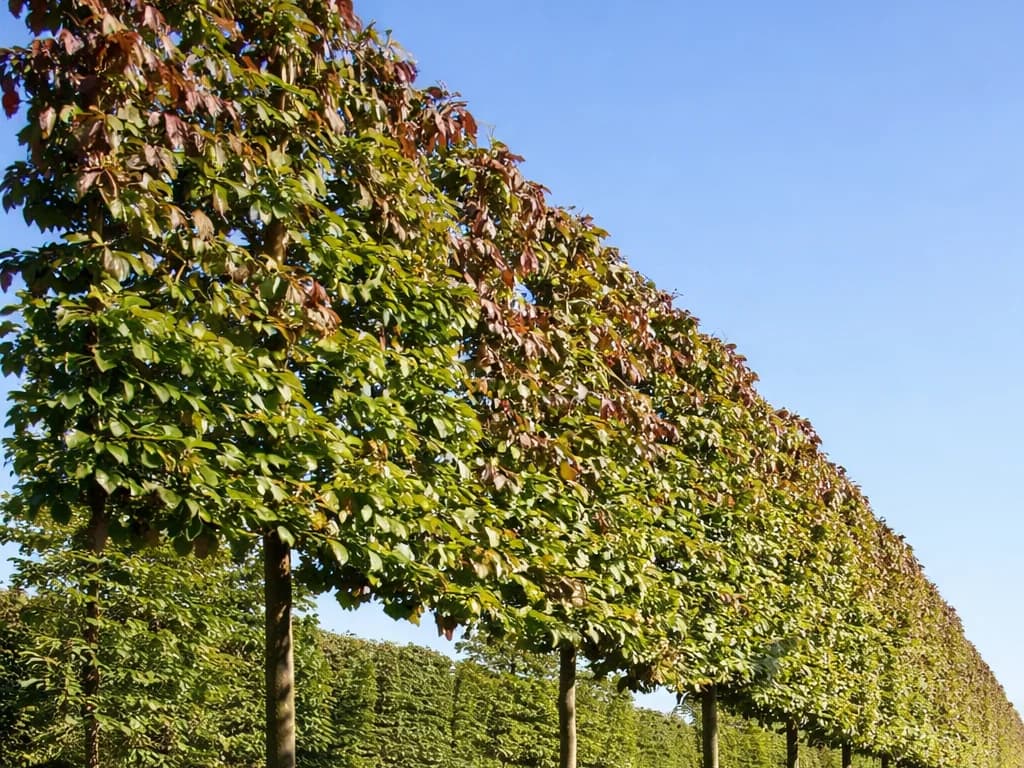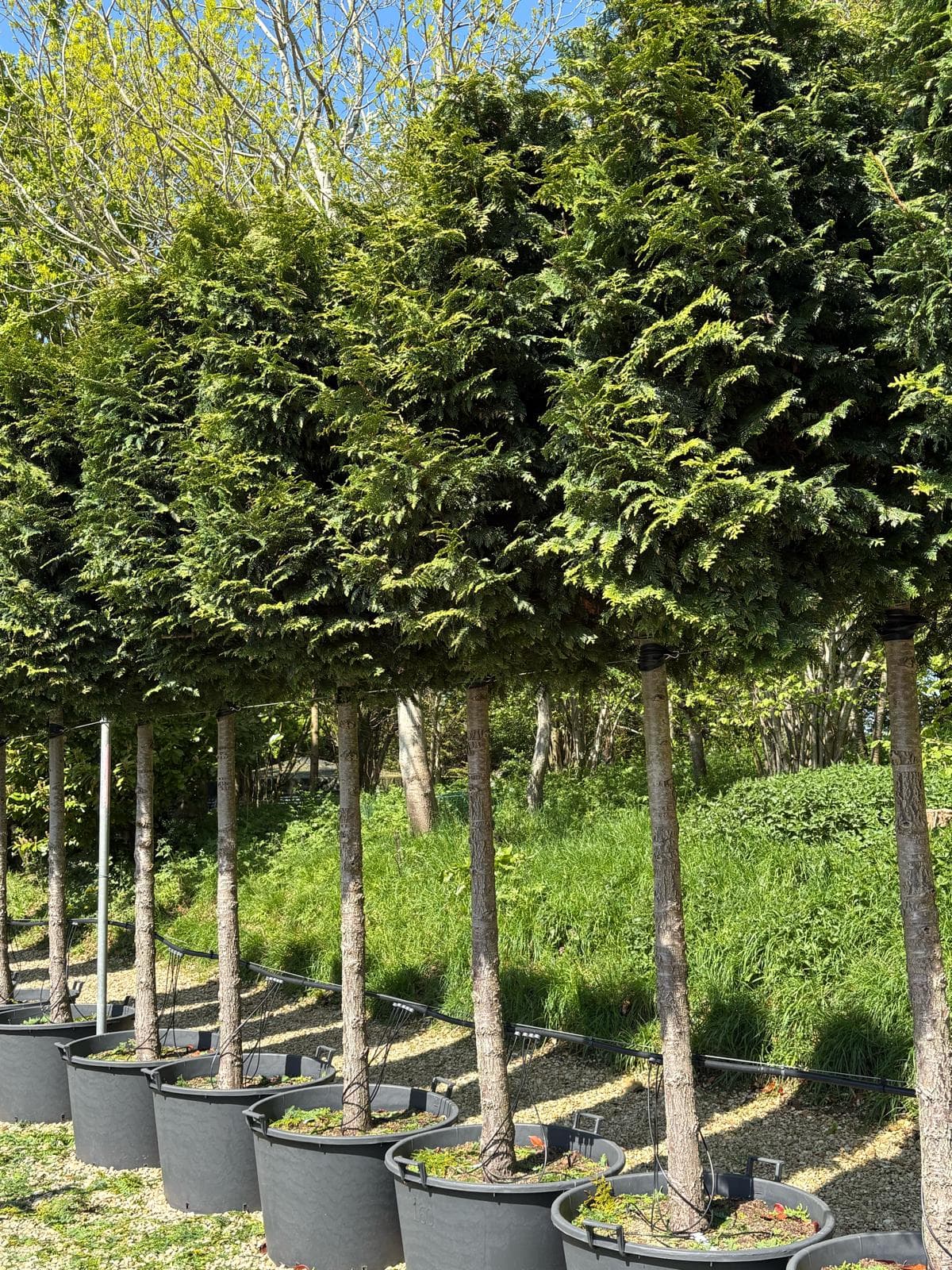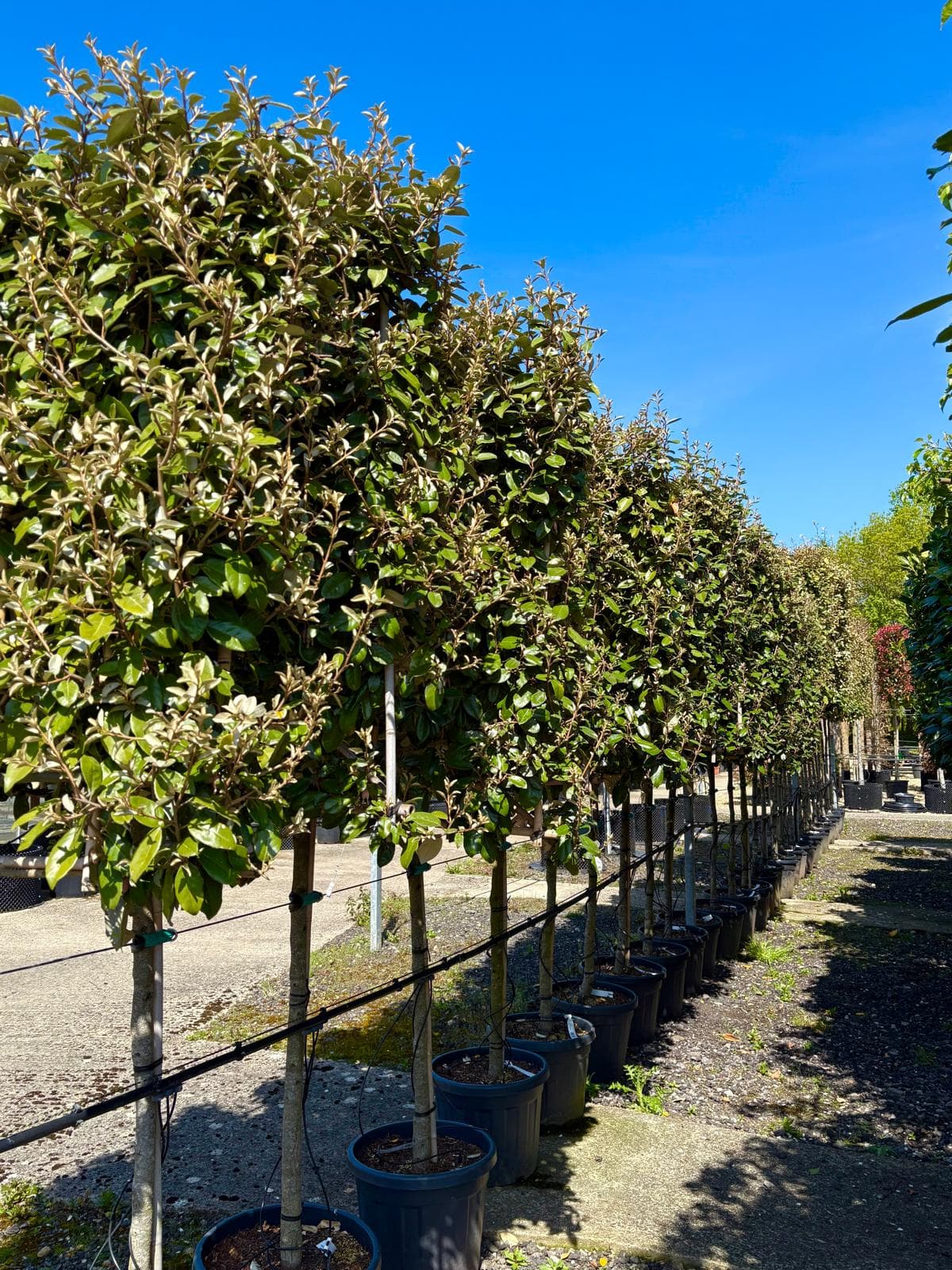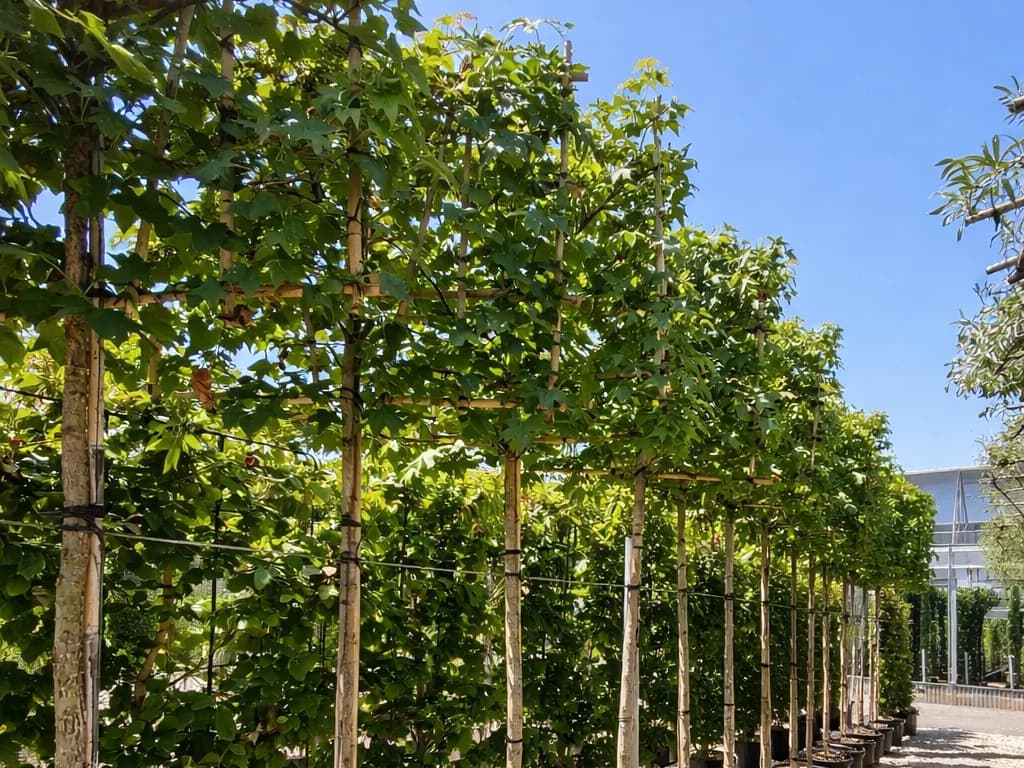
Tilia cordata 'Rancho'
Pleached Lime
A compact small-leaved Lime with dense heart-shaped foliage, Tilia cordata ‘Rancho’ produces fragrant yellow flowers in June and July that attract bees, a firm favourite for paths, driveways, avenues and formal screening.
or call us directly
01672 861883Product Gallery
The year-round interest created by this small compact tree ensures it is fast becoming a firm favourite.
Deciduous
High pleached options
Also available as Box Head, Standard and Parasol Trees. Please get in touch for more options.
Stem girth from 12-14cm up to 30-35cm, occasionally bigger available but they need booking in advance
Various stem heights and frame sizes available on our Pleached Limes
Trained on frame in pleached form for 1-5 years in some cases even longer
Pleached Lime trees are available as freshly pleached trees while stocks last
Pleached Limes are available in pots/containers, cocoa rootball or rootball
Nationwide delivery service by articulated lorry, smaller vehicle by prior arrangement
Browse our current pleached tree stock, selected for structure, form, and maturity
View Stock & PricesThe graceful habit of Limes has captured the attention of Landscape Architects and Garden Designers for decades. Trained in a formal fashion and a clone of Tilia cordata – the ‘Rancho’, is no exception. While the large majority of formal trees look unkempt if left unattended, the Lime just seems to get better the more its foliage tumbles from mature branches.
The Rancho differs from the ‘Greenspire’ in a number of respects – it has a more compact uniform habit and it is smaller too making it popular for pleached tree training (the cordata is best suited to being trained as espalier). Achieving a height of 10-15m, young trees have narrow crowns while with age they gradually become more rounded. The bark on fresh young branches and twigs is green but this colour changes gradually to reddish-brown and finally dark brown as each season passes. The bark on old limbs is grooved and against fresh new lime green foliage the contrast is superb. It produces a beautiful floral display and distinctive fragrance while having distinctive small leaves filling a dense crown. The leaves are 5-10cm long, dark green and shiny and heart shaped. In June to July yellow to cream coloured fragrant flowers arrive in umbels, valuable to honeybees and butterflies.
The tree tolerates paving and hard landscaping extremely well, it is winter and frost hardy, has very good resistance to wind and will tolerate any soil conditions including slightly wet and dry soil. If you are looking for a tree which will tolerate being planted close to the sea the ‘Rancho’ needs to be on your list of preferred species. The ‘Rancho’ thrives in urban settings amongst hard and soft landscaping and in its natural form it looks fantastic, planted in avenues, along drives and pathways.
Available as high Pleached Limes or low pleached trees, high and low espalier trees, clear stem trees and block or box on stem. Available as rootball plants in the winter months, potted stock available while stocks last and cocoa rootball can be arranged for delivery throughout summer period by prior arrangement. The ‘Rancho’ is relatively unknown in the United Kingdom, where the ‘Greenspire’ is usually specified instead. If you are looking for smaller compact Lime tree, the ‘Rancho’ is a popular choice.
Planting advice for pleached trees and espalier trees in the UK.
An important consideration when planting Pleached Lime trees in a straight line is the slope of the ground. Pleached or espalier trees look their best when they are planted on flat or gently sloping ground. Doing so will line up the frames and stems and creating effect of one continuous line when viewed at all angles. Even on a gradual slope this effect can be achieved. However, with a slope of more than 10-12 degrees, it may be necessary to step the trees/frames when planting (the frames on freshly pleached trees can be manipulated to account for a sharper slope of perhaps 15 degree if necessary).
To create a good visual effect, it is important to line up the stems and frames (unless you are planting them in a circle or semi-circle). To start off the planting holes should measure roughly double the width of the rootball or pot….
Read our full planting guide here