Quercus ilex
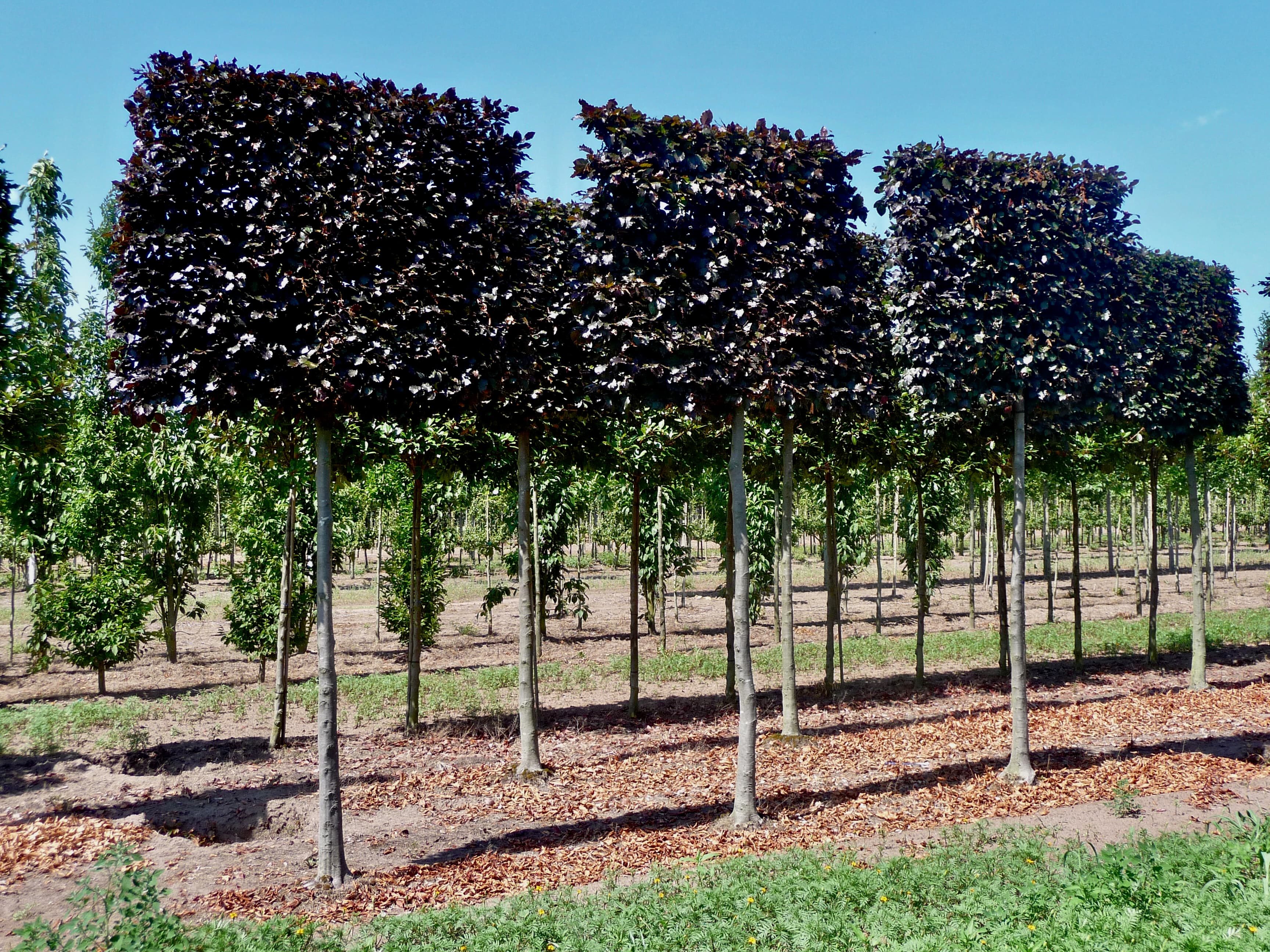
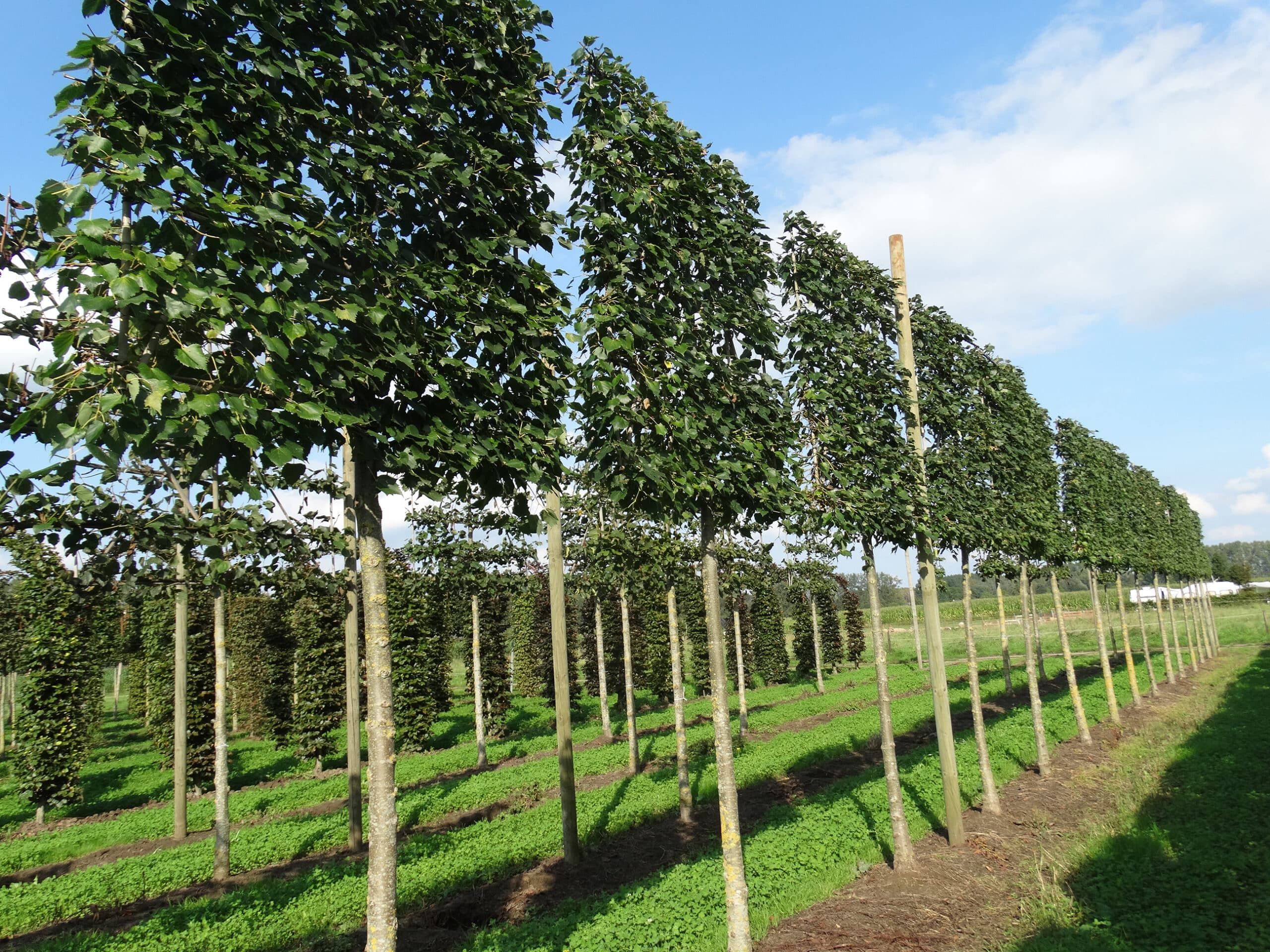
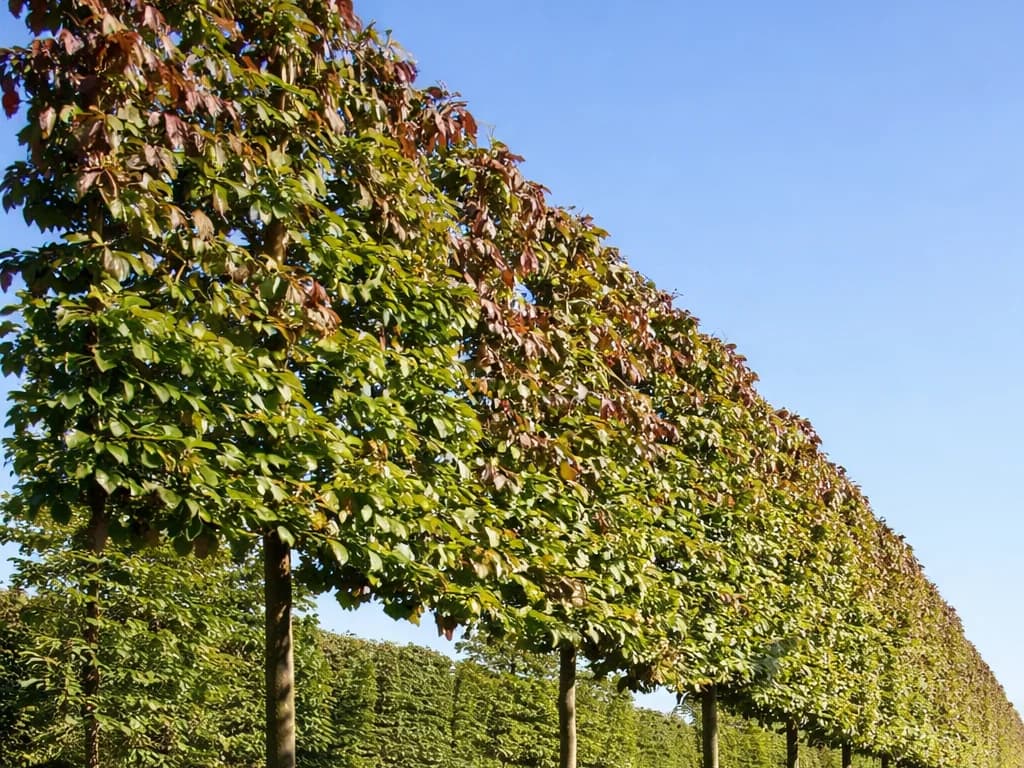
Pleached Holm Oak
Not currently available due to the well documented Oak Processionary Moth guidelines
A beautiful Mediterranean Evergreen Oak capable of living for thousands of years, Quercus ilex carries small dark green glossy leaves on a tough, long-lived frame, one of the very best upmarket evergreen species, ideal for formal clipped hedging, screening and coastal sites.
Available Forms
or call us directly
01672 861883Used extensively for training into topiary and various other formed shapes. A tough tree it thoroughly enjoys being planted in coastal and urban settings.
Evergreen
High and low pleached options
Also available as Standard Trees. Please get in touch for more options.
Stem girth from 10-12cm to 20-25cm, occasionally bigger available but they need booking in advance
Various stem heights and frame sizes available
Trained on frame in pleached form for 1-6+ years
Pleached Holm Oak is available in pots and containers
Nationwide delivery service by articulated lorry, smaller vehicle by prior arrangement
Please Note: these trees cannot currently be imported into areas of the UK designated free of OPM – Oak Processionary Moth, as set out by the Animal and Plant Health Agency. Please contact us for further details.
Browse our current pleached tree stock, selected for structure, form, and maturity
View Stock & PricesHolm Oak, Evergreen Oak, Holly Oak – Quercus ilex (Fagaceae)
The Holm Oak, is a splendid Evergreen Oak tree which has naturalised in all but the coldest parts of the United Kingdom. Native to the Mediterranean, there are numerous trees in existence over 1000 years old. The first record of a Holm Oak being planted using acorns was in England in 1803 at Mamhead Park, Devon and the trees can still be seen growing in the grounds of this stately home today.
Widely regarded as the evergreen species of choice, it is always in high demand as a trained tree and more specifically pleached trees. Although reaching heights of 28m, they are relatively slow growing and after 25 years the tree will be just 7-10m high and 4-6m wide.
The tree develops densely leafed branches which can hang low in a pendula fashion as the tree matures creating a broad round crown. Some trees have a more upright habit. The bark is grey brown and finely grooved. May is the autumn month for this evergreen, when large quantities of leaves fall to the floor ready for the arrival of the new foliage. In early June the fresh green leaves emerge dark and glossy with a whitish underside measuring 4-7cm long. Being reared from seed there can be quite a big variation in the shape of the tree and also the size of the leaf depending on which region they have been sourced from. One thing is for sure, they always look beautiful. Long (6-10cm) gold coloured catkins develop which are followed by dark green acorns 1-2cm long in groups of between two and five clumped together. In autumn the acorns turn a dark red/brown and fall to the ground offering squirrels an important source of food. One of the top three trees used for truffle orchards, the acorns are an important source of food for free range pigs reared for ibérico ham production on the Iberian Peninsula.
The tree is very shade tolerant and is happy growing amongst other trees in a woodland setting or as we prefer as a solitaire pieces in the middle of open parkland. While unable to withstand severe frosts and harsh winters, with global warming and an increase in average temperatures the trees are finding their way further north and doing rather well. Winter hardy down to approximately -12C, the Holm Oak is a common sight in the SW of England. An area where they are prolific is Dorset, Sandbanks, Canford Cliffs and Bournemouth for example where the trees self-seed and grow wild due to a combination of warm summers and loamy free draining soils, which they prefer. The tree will also grow successfully in clay-based soils and chalk/limestone as long as it is free draining. Salt tolerant they can be seen growing quite happily just a few meters from the high tide mark in these areas. Sandy coastal plots of land can be difficult to populate with trees as they find it difficult to anchor themselves sufficiently. The benefit of the Holm Oak is its strong root system which can be sent down quite some distance to provide a stable platform for development.
If you are looking for a large evergreen hardwood tree to help populate a coastal site, one that does particularly well in harsh coastal conditions then the Holm Oak may be a good choice. They can be clipped to shape easily and thoroughly enjoy being kept in a formal fashion which is why they are so well suited to pleaching as well as other formal shapes. Suitable for planting in large gardens, parks, coastal areas and commercial sites we offer them as clear stem trees, specimen solitaire trees and feathered trees. If clipped and managed either as topiary or as a formed tree they will suit a small to medium sized garden.
Planting advice for pleached trees, Freshly pleached trees, espalier trees and Freshly espaliered trees.
An important consideration when planting pleached or espalier trees in a straight line is the slope of the ground. Pleached or espalier trees look their best when they are planted on flat or gently sloping ground. Doing so will line up the frames and stems and creating effect of one continuous line when viewed at all angles. Even on a gradual slope this effect can be achieved. However, with a slope of more than 10-12 degrees, it may be necessary to step the trees/frames when planting (the frames on freshly pleached trees can be manipulated to account for a sharper slope of perhaps 15 degree if necessary).
To create a good visual effect, it is important to line up the stems and frames (unless you are planting them in a circle or semi-circle). To start off the planting holes should measure roughly double the width of the rootball or pot….
Read our full planting guide here