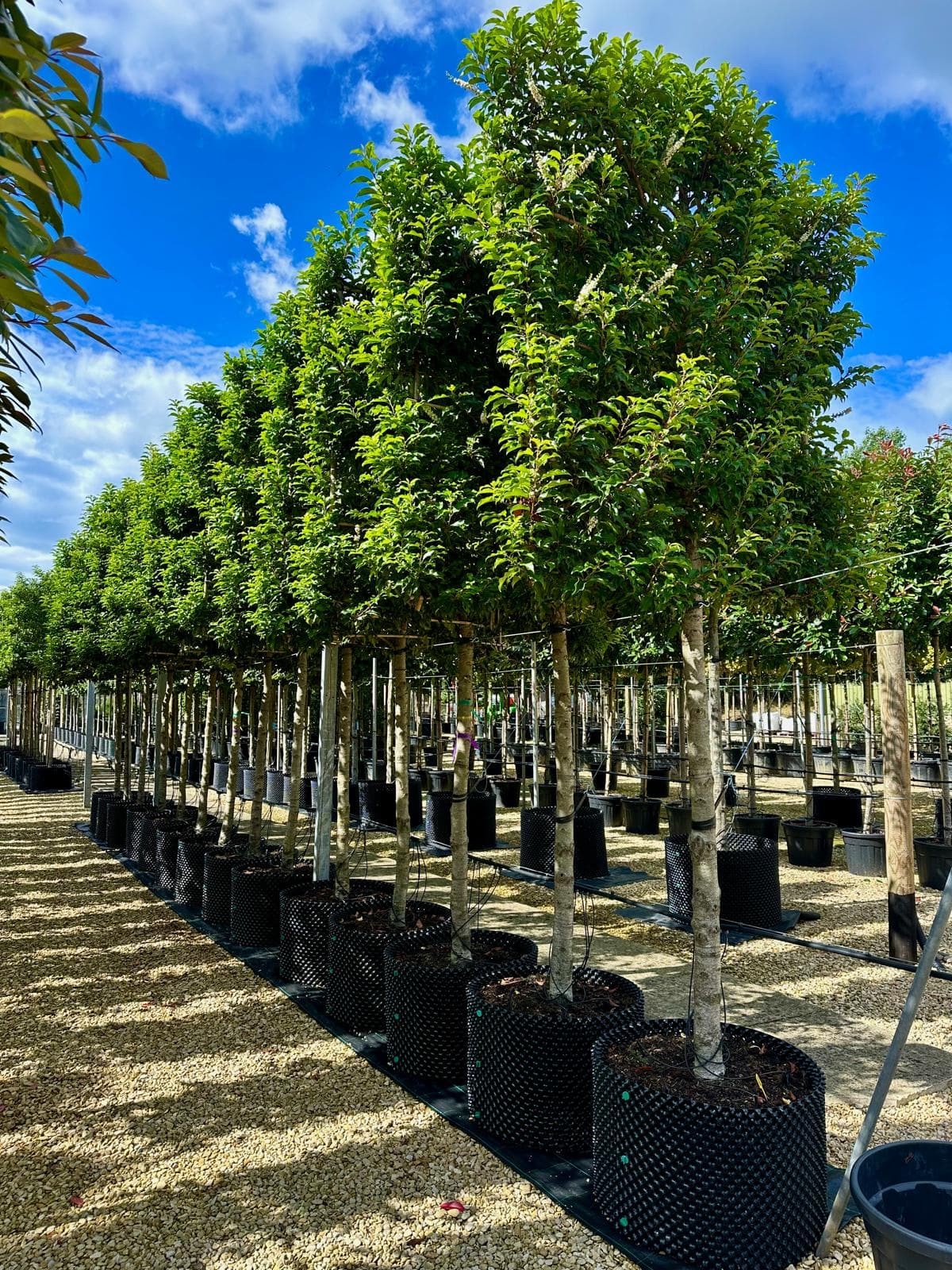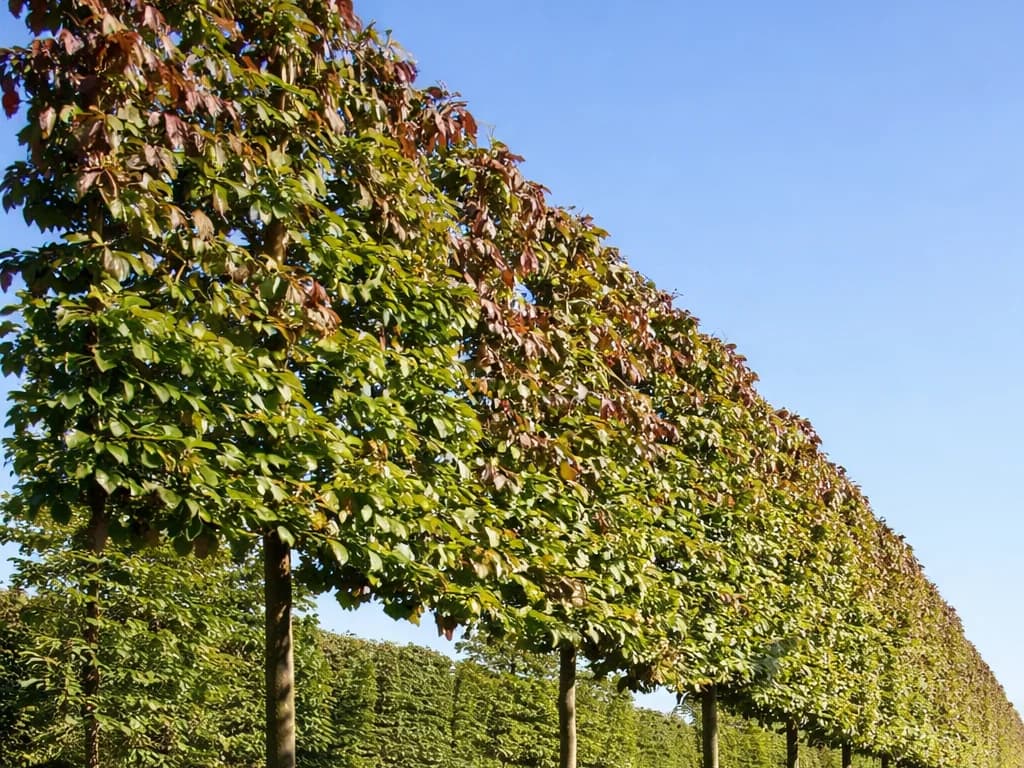
Prunus laurocerasus 'Rotundifolia'
Pleached Cherry Laurel Rotundifolia
A vigorous cultivar of Cherry Laurel with an upright growth habit and large glossy leaves, Prunus laurocerasus ‘Rotundifolia’ produces white flower spikes in spring, well suited to formal training and tolerant of shade.
or call us directly
01672 861883Product Gallery
With dark green leaves, blossom and the ability to tolerate shady conditions it will continue to be a popular choice.
Evergreen
High Pleached Laurel options
Also available as screens and hedge plants
Stem girth from 10-12cm to 14-16cm, occasionally bigger available but they need booking in advance
Various stem heights and frame sizes available
Trained on frame in pleached form for 1-3+ years
Pleached Cherry Laurel is available in pots and container
Nationwide delivery service by articulated lorry, smaller vehicle by prior arrangement
Browse our current pleached tree stock, selected for structure, form, and maturity
View Stock & PricesCherry Laurel ‘Rotundifolia’, Laurel Tree – Prunus laurocerasus ‘Rotundifolia’
Prunus laurocerasus ‘Rotundifolia’ is a cultivar of the popular Prunus laurocerasus (Common Laurel, English Laurel).
Considered tougher than the Common Laurel, its ovate leaves are narrower and a darker shade of green too. The combination of smaller leaves and compact habit produces a plant with a more structured feel and therefore more suited to being planted as a formal hedge or screen where space is at a premium. Quite capable of reaching heights of 3-5m it has a more upright habit when young, but as it matures it spreads to develop crowns that are as wide as they are tall. In spring the plant produces small fragrant white flowers typical of this species. Shortly afterwards, small red berries appear which slowly ripen over summer to form into black cherry like fruits. Bees enjoy the blossom while birds enjoy the fruits but note, the plant and berries are toxic to humans so not fit for consumption.
Maintenance
As is common with most Laurel varieties, the Rotundifolia produces dense opaque screens which are ideal for blocking out traffic noise and prying eyes. It prefers to be pruned any time from May to mid-August to give the new growth a chance to harden before being subject to cold temperatures and the first frost. Pruning is best done with a combination of secateurs or loppers on more mature growth and shears on newer growth. Although the leaves are smaller than those found on the Common Laurel, electric and petrol hedge cutters tend to tear the large leaves and make for a rather unsightly finish – not considered too much of a problem for some as fresh foliage quickly cover damaged leaves.
Planting
It will tolerate all soil conditions including wet and dry soil but can take time to get going in chalk. When planting add well-rotted compost first as the plant will benefit. Tolerant of paving and hard landscaping, with a relatively shallow root system it should not be covered completely. The plant does well in tree containers and large pots, large and medium sized gardens and industrial areas.
Planting advice for pleached trees, Freshly pleached trees, espalier trees and Freshly espaliered trees.
An important consideration when planting pleached or espalier trees in a straight line is the slope of the ground. Pleached or espalier trees look their best when they are planted on flat or gently sloping ground. Doing so will line up the frames and stems and creating effect of one continuous line when viewed at all angles. Even on a gradual slope this effect can be achieved. However, with a slope of more than 10-12 degrees, it may be necessary to step the trees/frames when planting (the frames on freshly pleached trees can be manipulated to account for a sharper slope of perhaps 15 degree if necessary).
To create a good visual effect, it is important to line up the stems and frames (unless you are planting them in a circle or semi-circle). To start off the planting holes should measure roughly double the width of the rootball or pot.