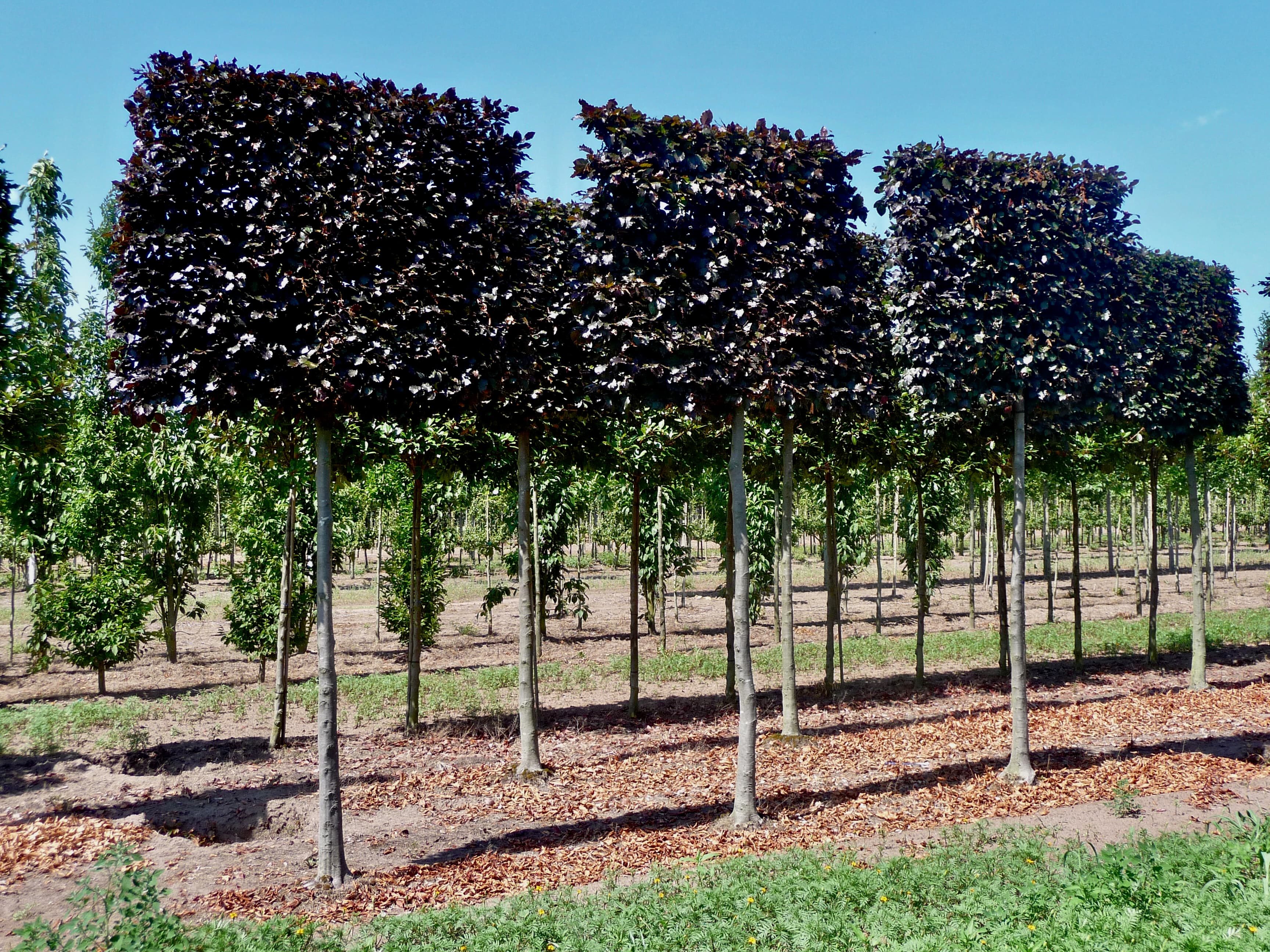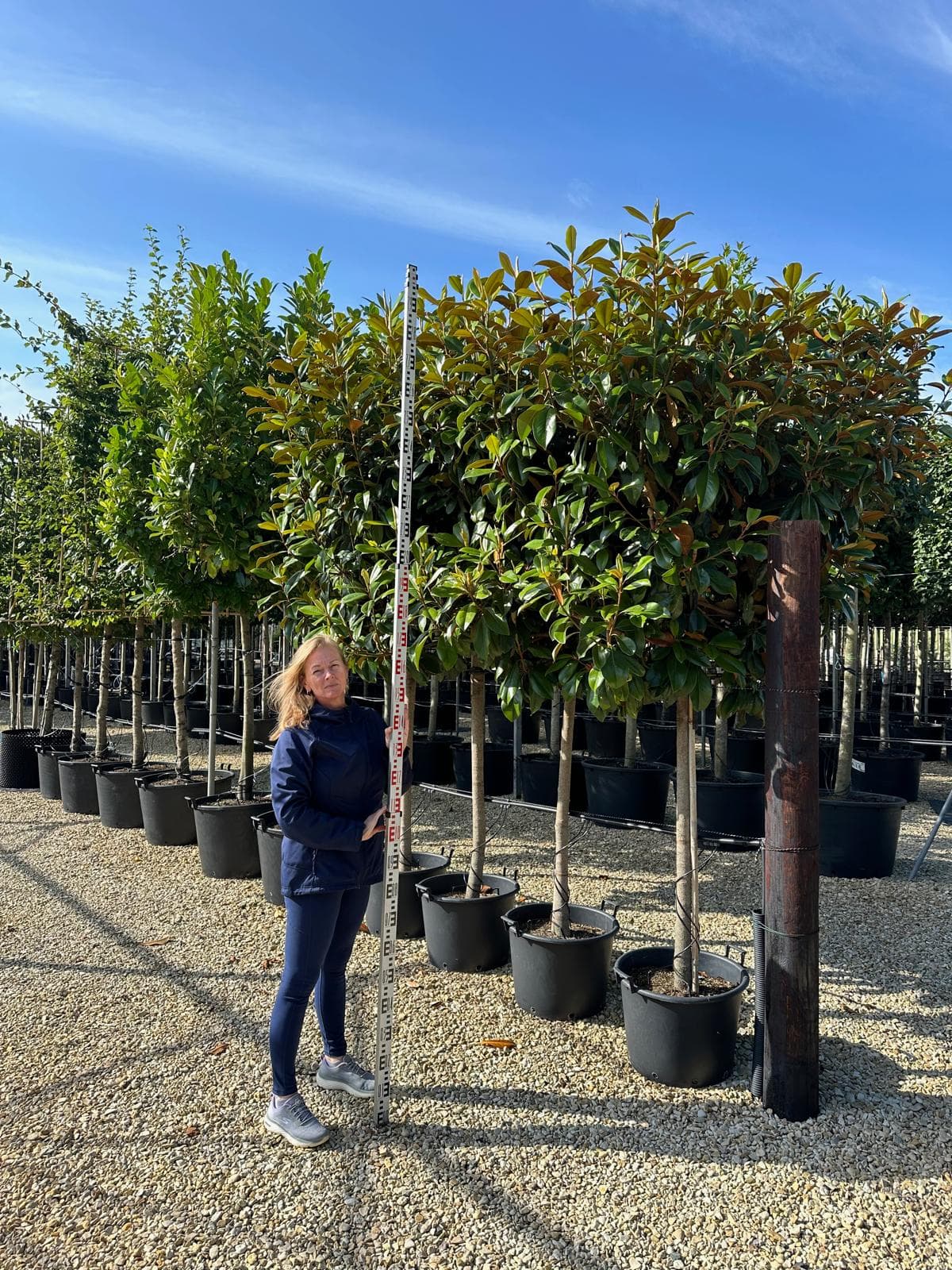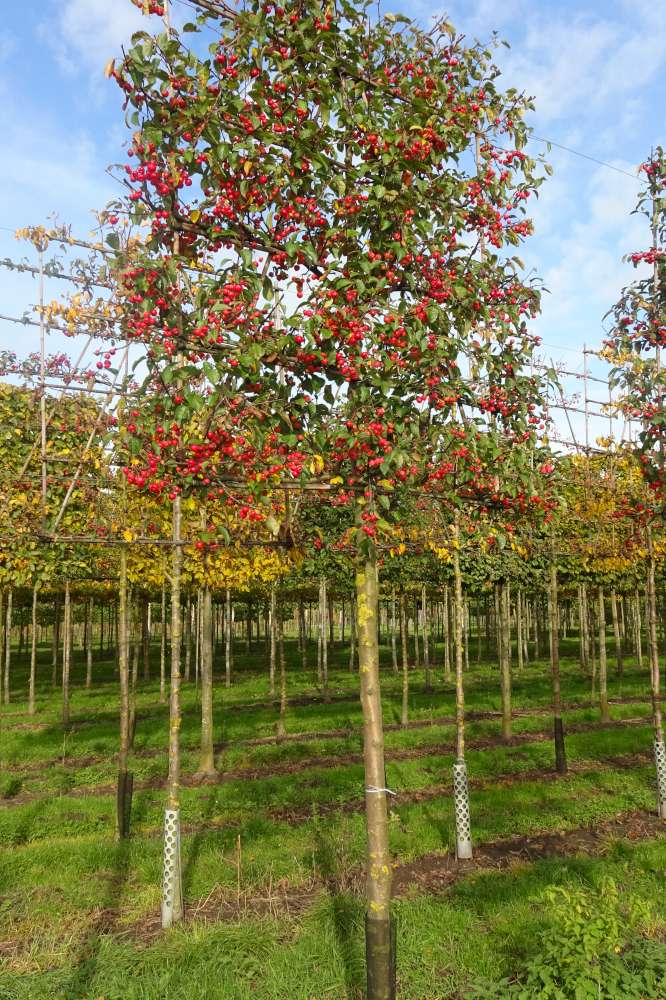
Carpinus betulus
Pleached Hornbeam
Pleached Hornbeam or Carpinus betulus is by far the most popular deciduous pleached tree sold in the United Kingdom, owing to its many outstanding qualities. Delicate in appearance but hardy by nature, and with a somewhat mystical heritage, there is a place in every garden for Hornbeam, in one form or another. In mid-April, fresh lime-green coloured leaves emerge. Pleached Hornbeam Trees recover quickly after maintenance pruning, producing new growth throughout the growing season. The autumn foliage turns golden yellow. Carpinus betulus responds particularly well to regular management, suffers from very few diseases, and is truly a tree for the future.
Product Gallery
Deciduous
High and low options
Carpinus betulus is also available as screens, tall hedges, instant hedging, topiary trees, box head trees, arches, multi stem, feathered trees, tall standard and more
Clear stem girth from 12-14cm up to 35-40cm, occasionally bigger ones available but larger specimens need booking in advance
Various clear stem heights and frame sizes available
Trained on bamboo frames for 1-10 years, sometimes longer
Available as freshly pleached trees while stocks last
Mature pleached trees are available in various pot sizes, cocoa or root-ball plants
Nationwide delivery service by articulated lorry, smaller vehicle by prior arrangement. Call us to discuss your requirements.
Browse our current pleached tree stock, selected for structure, form, and maturity
View Stock & PricesAbout Hornbeam – Carpinus betulus (Betulaceae)
At Hedgeworx, clear stem Pleached Hornbeam trees (Carpinus betulus) are the most popular form tree species we sell. Available in the widest range of pre-trained shapes and sizes particularly as freshly pleached and also more mature trees. Hornbeam (like Beech), maintained in a formal fashion with tightly clipped crowns, hold onto their leaves into the winter. It is widely cultivated as an ornamental tree for planting in gardens and parks throughout North West Europe.
A Native Species
Carpinus betulus, can be found across the United Kingdom in formal gardens and urban settings. Trees of 200 years old or more are quite common, reaching a height of 15-20m. Of all the deciduous species which lend themselves to being managed, Hornbeam trees probably enjoy it most.
A relatively small tree which quite happily grows beneath the canopies of much larger trees, it is a real survivor. In reduced light conditions it copes surprising well with the damage caused by bows of larger trees falling into it. Perhaps its ability to heal so easily from severe damage and continue to produce new growth so vigorously is testament to why this tree is ideal for even the most demanding training. In fact, this tree is so strong year round that it will drop all of its leaves during the summer months if it is not watered correctly or during severe drought conditions (when other trees do not and instead fail).
This simple defence mechanism reduces the need for the uptake of moisture from the ground. Once rain falls, the tree produces a whole new set of leaves within a 6-8-week period, often denser than the first set and in some instances, you would never know the tree had been through a period of stress. A real survivor and one of our favourite trees for training. Please note: newly planted Hornbeam trees will fail if not watered correctly. Our tests were carried out in nursery conditions. While we have recorded this behaviour in the wild, not all trees survive. Failure to irrigates trees correctly can lead to parts of or all of the tree dying. Do not allow a tree to lose its leaves due to a lack of moisture.
Care and Maintenance
Clipping the crown of pleached Carpinus betulus, on a regular basis produces a dense almost impenetrable canopy where the bamboo frames used for initial training are soon hidden. The young intricate branches and twigs are grey-brown in colour while the bark of the older branches and bows, including the trunk is dark grey. The bark is smooth to touch. The leaves are deeply corrugated with veins, avoid in shape and bright green, measuring 6-10cm long. From mid-April onward the Hornbeam produces its new leaves making it earlier than the Common Beech (Fagus sylvatica). The vivid green leaves (4-9cm long) quickly produce a dense covering and gradually turn a dark colour green as the season progresses.
Carpinus betulus produce small catkins in April or May, producing small ovoid ribbed nuts months later – in garden or grounds maintenance terms the spoils are of little consequence apart from the annual autumn leaf clear up. In autumn the leaves turn golden yellow and then brown.
If they are pruned annually, the dry brown leaves tend to remain on the tree well into the winter and in some cases only to fall off when new leaves push through in the spring. The root system is relatively close to the surface so careful consideration must be given to hard landscaping in this area. Hornbeam trees are usually considered non-toxic and they suffer from very few diseases.
What Soil and Environment does it need?
Hornbeam trees or Carpinus betulus can be found all over the United Kingdom, the exception being exposed coastal sites and elevations above 600m. It will grow in most soil conditions and it is surprisingly adaptable and quite happily grows in areas of London with moderate clay, while doing equally well in sandy loamy soils on the South coast of England and the like. It copes surprisingly well in dry and wet soil conditions and can cope with short periods of flooding.
Considered winter hardy it can easily deal with the most extreme weather conditions the United Kingdom can throw its way. It does surprisingly well on windy sites. Suitable for planting in low light and shadow conditions. This really is a versatile tree ideally suited to tall hedges, topiary and form trees, cylinders, block on stem, columns, blocks, cones, arches, roof trained trees, low screens (low pleached trees), high screen (high pleached trees) sometimes called stilt hedging, multi-stem umbrella, multistem roof, cylinder on stem, high and low espalier.
Pleached hornbeam trees are available as root-ball plants in the winter months, potted stock available while stocks last and cocoa rootball plants can be arranged for delivery throughout summer period by prior arrangement, contact us to check availability.
Clipping the crown of pleached Carpinus betulus, on a regular basis produces a dense almost impenetrable canopy where the bamboo frames used for initial training are soon hidden. The young intricate branches and twigs are grey-brown in colour while the bark of the older branches and bows, including the trunk is dark grey. The bark is smooth to touch. The leaves are deeply corrugated with veins, avoid in shape and bright green, measuring 6-10cm long. From mid-April onward the Hornbeam produces its new leaves making it earlier than the Common Beech (Fagus sylvatica). The vivid green leaves (4-9cm long) quickly produce a dense covering and gradually turn a dark colour green as the season progresses.
Carpinus betulus produce small catkins in April or May, producing small ovoid ribbed nuts months later – in garden or grounds maintenance terms the spoils are of little consequence apart from the annual autumn leaf clear up. In autumn the leaves turn golden yellow and then brown.
If they are pruned annually, the dry brown leaves tend to remain on the tree well into the winter and in some cases only to fall off when new leaves push through in the spring. The root system is relatively close to the surface so careful consideration must be given to hard landscaping in this area. Hornbeam trees are usually considered non-toxic and they suffer from very few diseases.
Planting advice for Hornbeam
An important consideration when planting mature Pleached Hornbeam in a straight line is the slope of the planting area. Pleached or espalier trees look their best when they are planted on flat or gently sloping ground, often above fence panels. Doing so will line up the Bamboo frames and clear stems, creating the effect of one continuous line of hedge screen when viewed at all angles. The Bamboo frame will soon be hidden behind the foliage.
Even when the ground level is on a gradual slope this effect can be achieved. However, with a slope over 10-12 degrees, it may be necessary to step the trees and frames when planting (the Bamboo frames on freshly pleached trees can be manipulated to account for a sharper slope of perhaps 15 degrees if necessary)…
Read our full planting guide here.