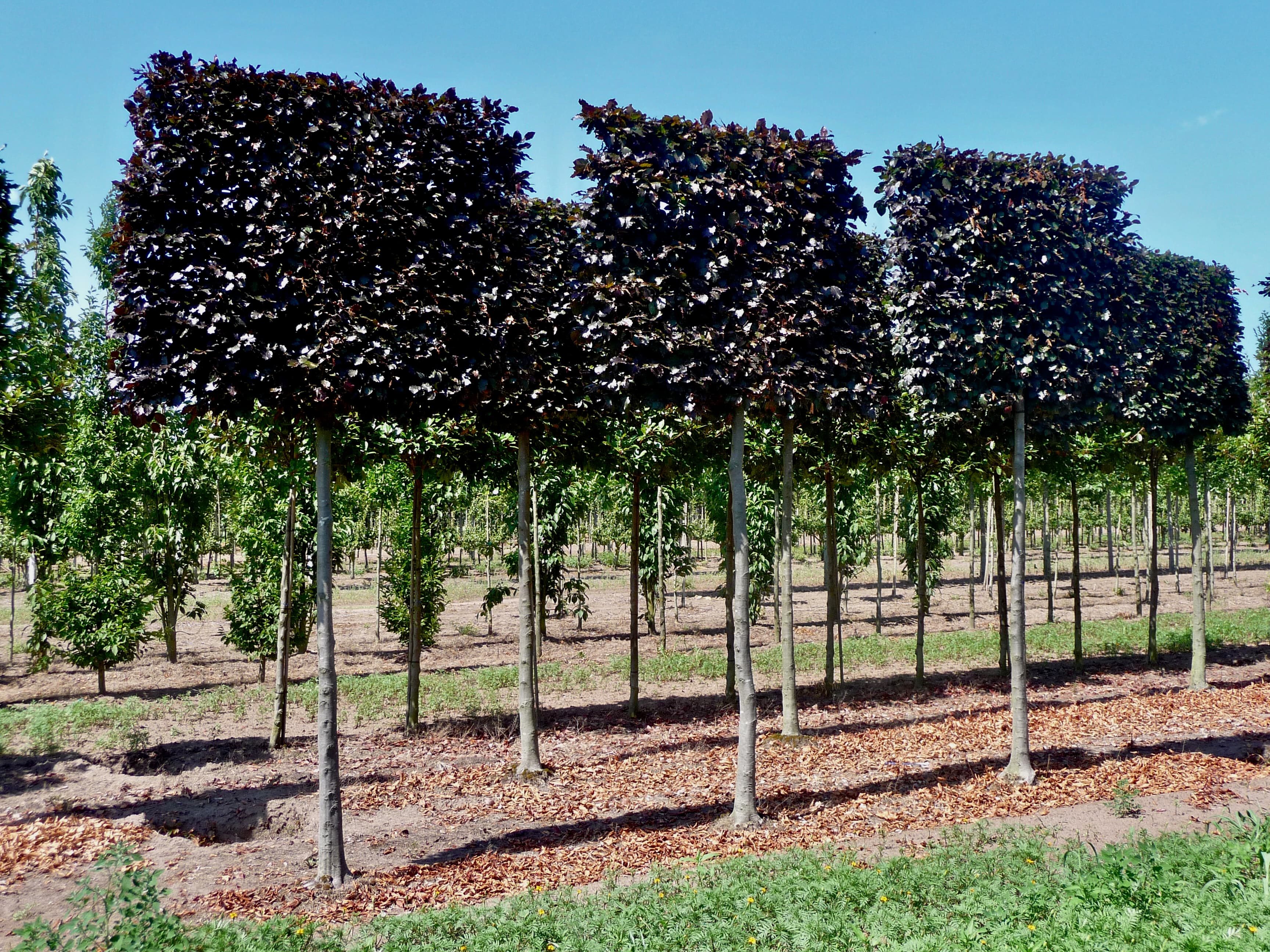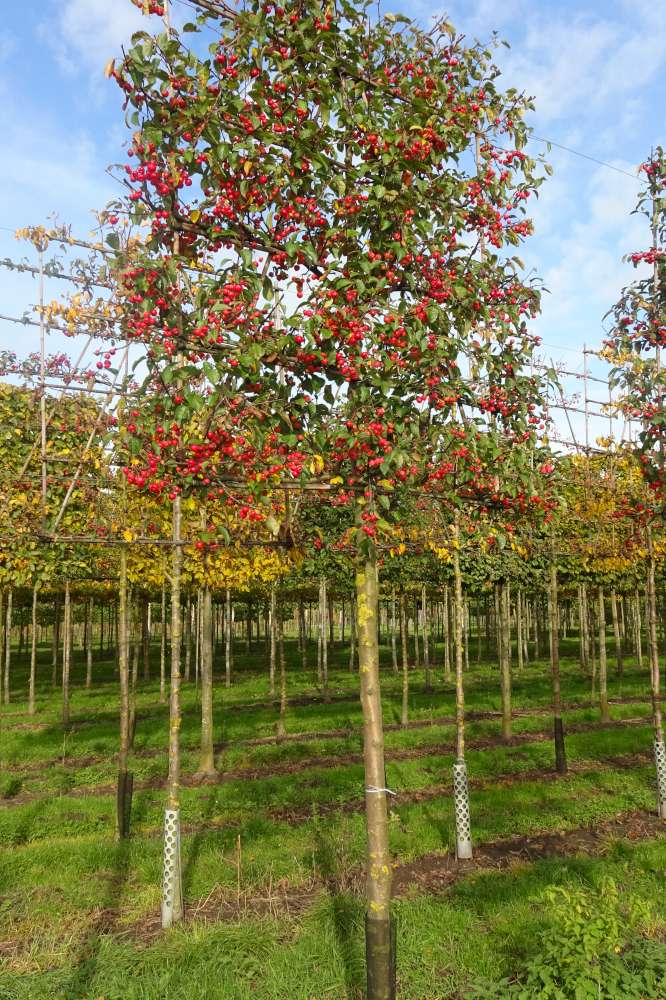
Photinia × fraseri 'Red Robin'
Pleached Photinia Red Robin
The most widely sold evergreen screen on the market, Photinia × fraseri ‘Red Robin’ carries vibrant bright red young foliage that matures to glossy green, with white spring flowers, fast-growing, dependable and popular for colourful formal hedging.
Available Forms
or call us directly
01672 861883Product Gallery
With full screens from ground level to 400cm tall and pretty much all sizes in-between, it is no wonder pleached Red Robin trees are so popular. The year-round interest created by the changing red to green to red leaf colour, the cream flowers and the red berries means it remains a firm favourite for those seeking a competitive way to create additional privacy and screening.
Evergreen
High and low Pleached Photinia options
Also available as Hedging. Please get in touch for more options.
Stem girth from 10-12cm up to 18-20cm, occasionally bigger available but they need booking in advance
Various stem heights and frame sizes available
Trained on frame in pleached form for 1-5+ years
Red Robin pleached trees are available in pots and container
Nationwide delivery service by articulated lorry, smaller vehicle by prior arrangement
Browse our current pleached tree stock, selected for structure, form, and maturity
View Stock & PricesPleached Photinia Red Robin
Photinia is one of the most popular and versatile evergreen shrubs available. Of the numerous Photinia hybrids available, Photinia × fraseri 'Red Robin' is probably the most widely planted cultivar of them all and it has gained the Royal Horticultural Society’s Award of Garden Merit.
Sometimes called a tree, this medium sized shrub brings a burst of fiery red colour to the garden. It has a dense bushy crown when fully mature and is capable of reaching heights of 3-7 meters. Its habit is upright when young, but this quickly spreads outwards as the plant matures. It thoroughly enjoys being managed and trained in a formal fashion with the result it is used widely in gardens as hedging, solitaire specimen pieces and pleached trees.
Its 10cm long, dark glossy elliptic leaves, appear deep red in colour in the spring, slowly changing to green as the season progresses, creating further interest. From May – June creamy white flowers emerge each season (unusual for an evergreen), which look particularly good against the bright red leaves and honeybees love them. The flowers are followed by small red berries approximately 0.5cm, which later turn black, providing food for birds including thrushes and starlings with seeds being dispersed in their droppings.
Planting
Photinia prefers well drained soil but will thrive in most soil types including clay with the correct preparation (remember drainage). In terms of aspect it does very well in full sunlight but will also respond reasonably well in areas of partial shade although it will not grow quite as quickly. Considered winter hardy and frost resistant although it has been known for early spring shoots to be damaged in late frosts. Generally, this damage has no ill effect on the plant, and it is well suited to the British climate. It prefers to be planted in sheltered areas where it doesn’t need to compete with other large specimens for light as the foliage covering can become sparse in cramped conditions, not therefore suitable for deep shade. Photinia prefers not to have its shallow roots covered entirely by hard landscaping.
Clipping and Pruning Trained Photinia
To keep the Red Robin looking its best, it needs pruning and clipping back regularly to keep the foliage and crown thick and dense – especially the case with stilted screens. Suitable for large and small gardens, parks and commercial sites such as company headquarters, it makes an excellent containerised plant, so ideal for roof gardens and raised beds – remember an annual feed programme to ensure the plant continues to thrive and look its best.
Available in containers as High pleached screens and Low pleached screens, hedge plants, instant hedge elements, specimen solitaire pieces to 500cm tall, topiary balls/cubes/ball on stem and clear stem trees. A popular plant available in containers and pots while stocks last.
Planting advice for pleached trees, Freshly pleached trees, espalier trees and Freshly espaliered trees.
An important consideration when planting pleached or espalier trees in a straight line is the slope of the ground. Pleached or espalier trees look their best when they are planted on flat or gently sloping ground. Doing so will line up the frames and stems and creating effect of one continuous line when viewed at all angles. Even on a gradual slope this effect can be achieved. However, with a slope of more than 10-12 degrees, it may be necessary to step the trees/frames when planting (the frames on freshly pleached trees can be manipulated to account for a sharper slope of perhaps 15 degree if necessary).
To create a good visual effect, it is important to line up the stems and frames (unless you are planting them in a circle or semi-circle). To start off the planting holes should measure roughly double the width of the rootball or pot….
Read our full planting guide here