
How Pleached Trees Are Made
Mature pleached trees start life as seedlings, being selected, trained, and shaped over many years by highly skilled nurserymen. The process requires expertise, patience, and deep horticultural knowledge.
Selection & Training
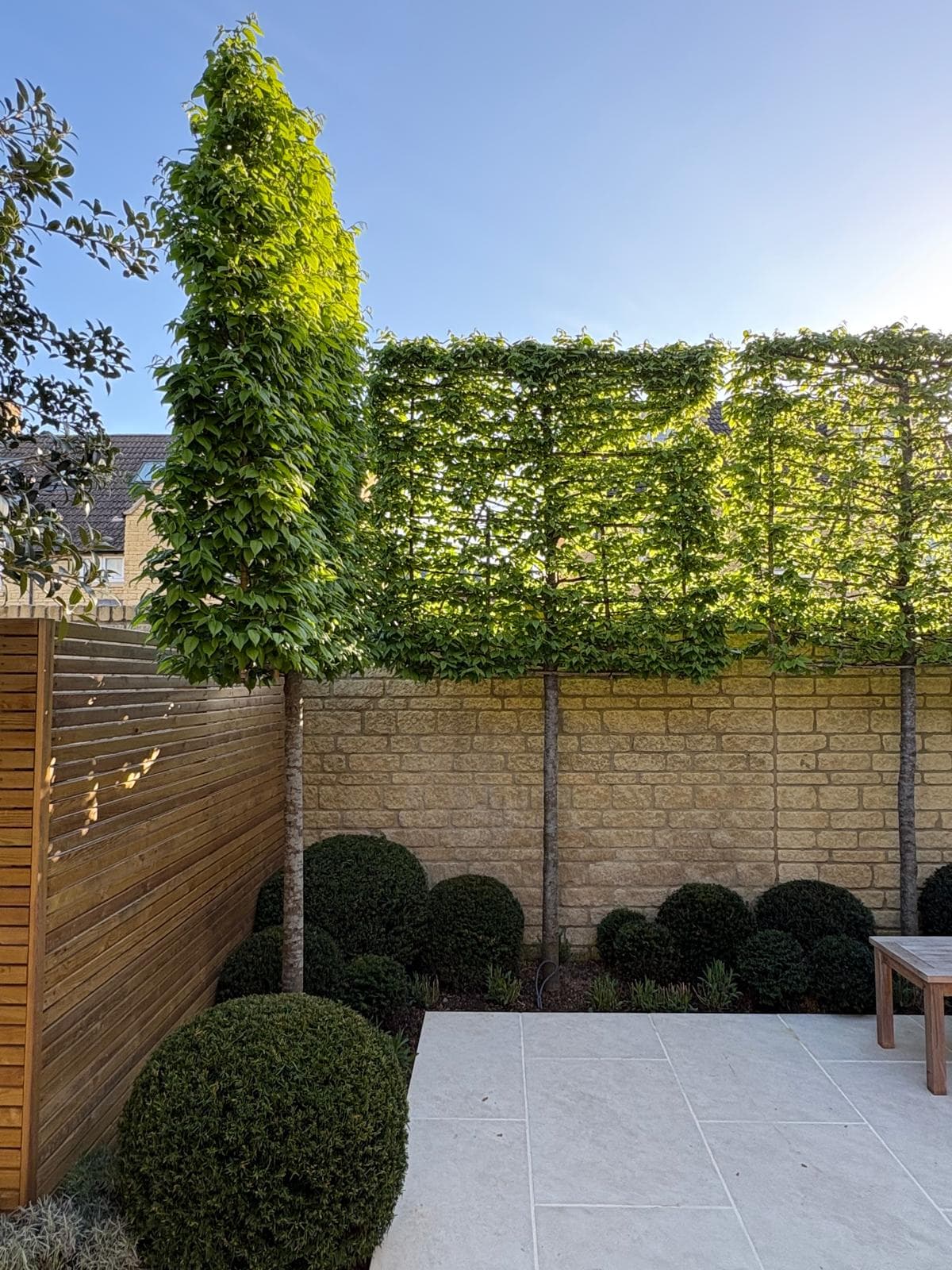
Choosing the Right Trees
When the time is right, highly skilled nurserymen and women go out into the field with tags in hand and pick the very best trees suitable to pleach. Criteria for choosing the best trees for training include selecting those with the straightest stems, healthy rootstock and appropriately spreading and uniform crowns. Once tagged and lifted, the trees are loaded onto trailers and sent to potting sheds for training.
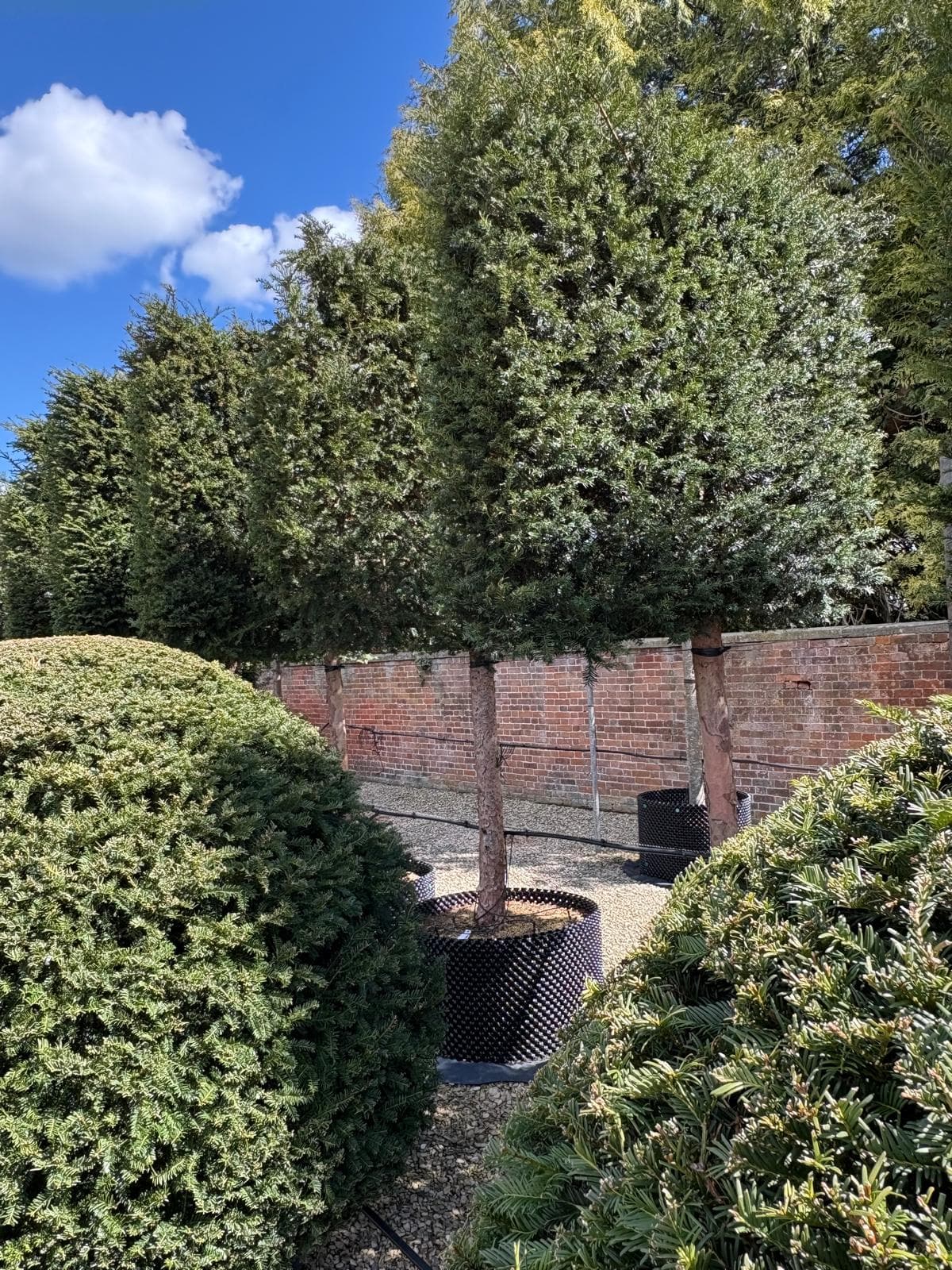
The Training Process
Training is usually performed best with a team of two or three skilled nurserymen. The first job is to clear the stems of all foliage to a predetermined height – Popular 'clean stem' heights include 120cm, 150cm, 160cm, 180cm, 200cm and 210cm – determined by the average height of walls and fences. Pleached trees are available with stem heights outside these sizes (from full screens with 30cm stems to tall screens starting at 230cm or more), but in the main the above 'clean stem' sizes are the most popular. Once the stems are cleared, a premade bamboo frame is placed face down on the training table. A tree is laid over the frame with the stem positioned over the midpoint of the frame. The bottom of the frame is positioned in line with the lowest branches. Now the stem is attached securely to the centre of the frame. Next, the branches are carefully manipulated one by one and tied to the frame using a soft expandable tying material, creating a latticework of branches covering the screen.
Development & Maturation
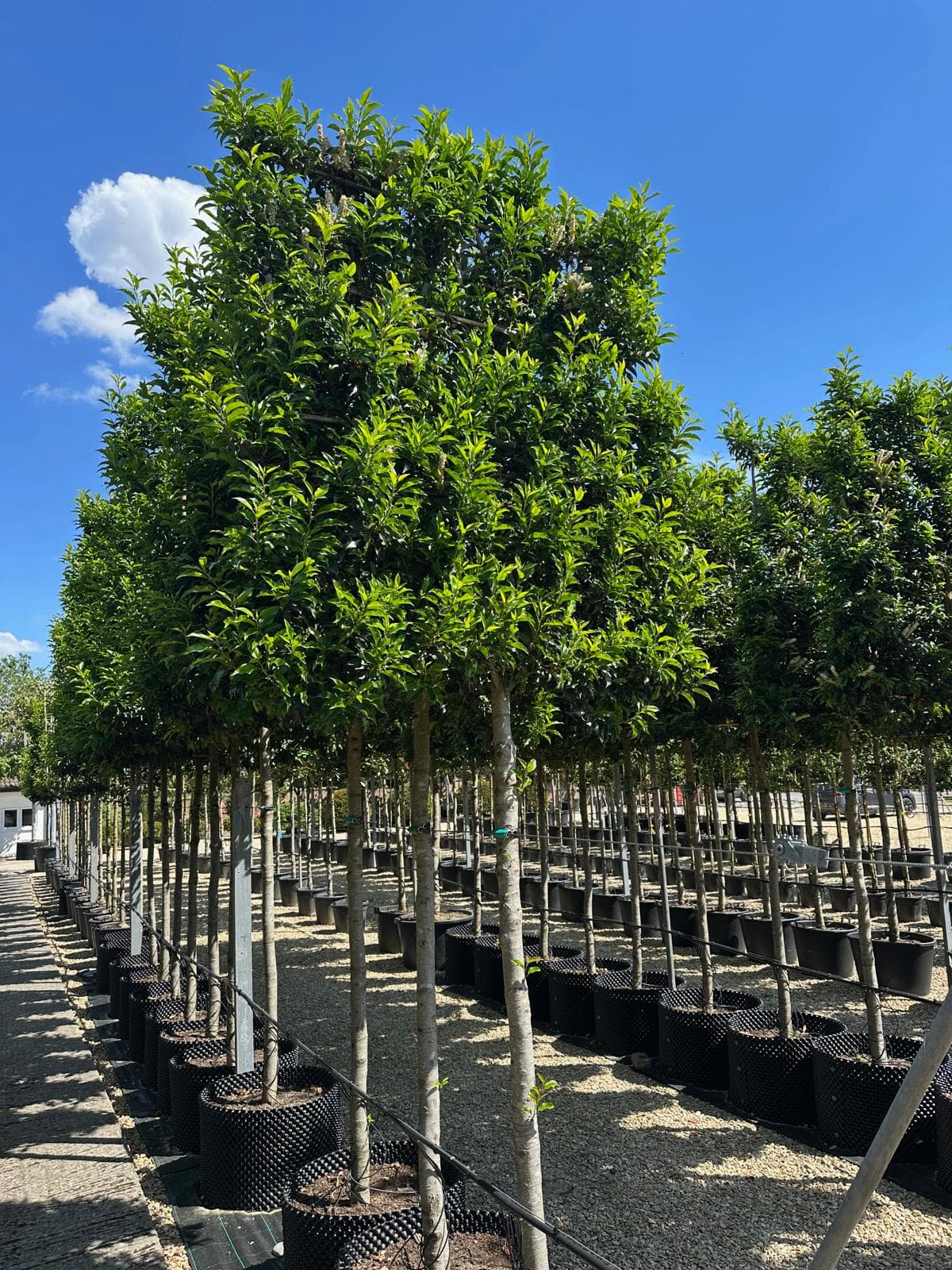
From Fresh to Mature
When training is complete, the trees are checked for quality before being returned to the field, where they develop for between 1 and 5 years on average. Each new season, fresh growth is tied to the frame or trimmed away, creating a screen which will measure approximately 30-40cm in depth after 3 years of training (slower-growing varieties such as Taxus can take longer to develop). Once the crown is full and it has taken on a definitive square shape, tying in all but stops, with a light trim once or twice a year being the only maintenance required to keep the trees looking in tip-top condition. A tree trained for 1 season (1 year) will have a relatively full screen but it will have little density. A tree trained for 5 seasons (5 years) will cover the frame entirely and measure roughly 30-40cm in depth or more. A 5-year pleached tree will command a higher price than a pleached tree trained for 1 year. Hedgeworx pleached trees are available for sale with training from 1 year to 5 years and in some instances much longer. We have sold trees in the past which have been trained for over 12 years. Please enquire about these older specimens.
Frames & Sizing
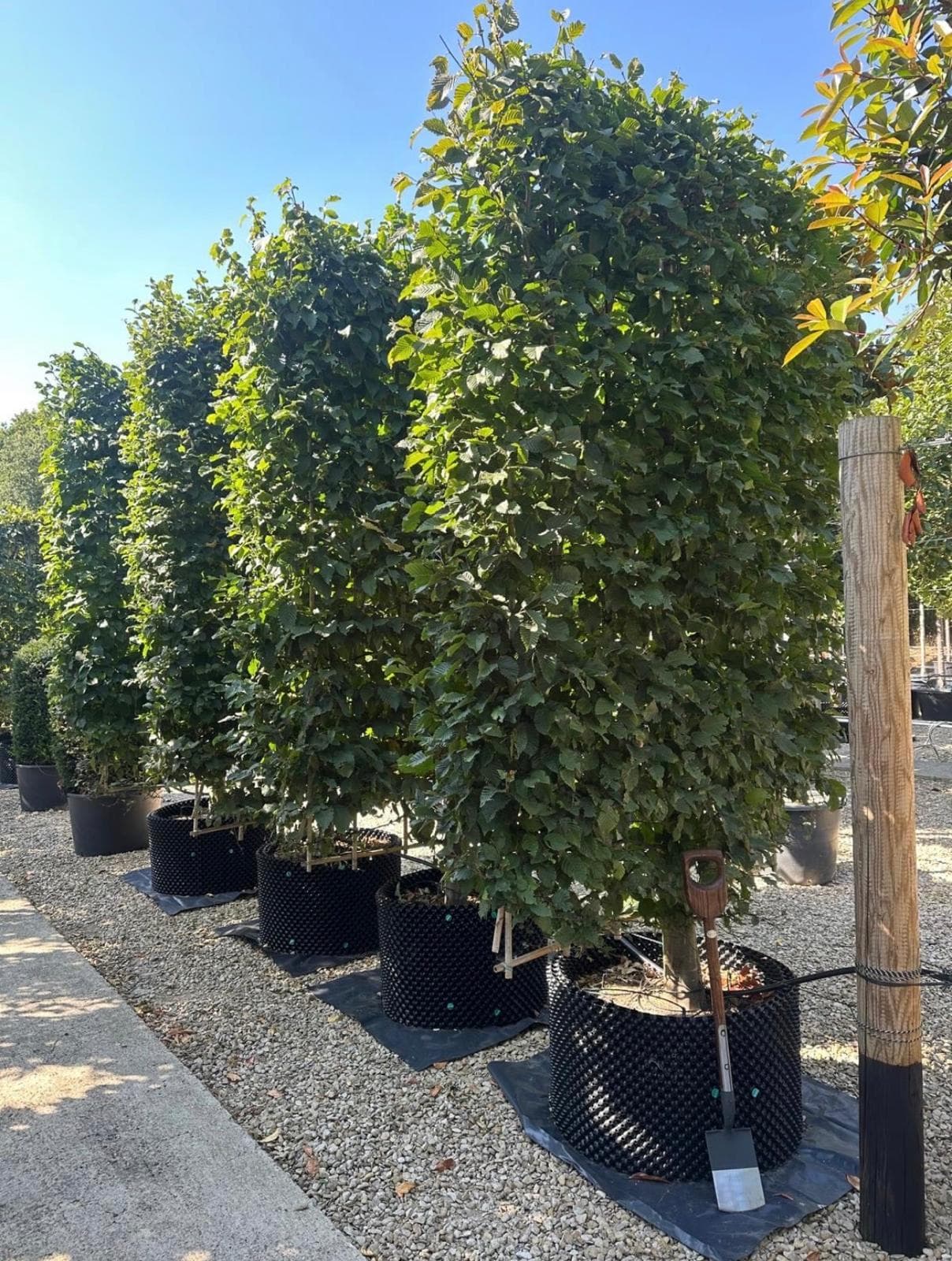
Frame Dimensions
Frame width and height are usually determined by the size of the tree being pleached i.e. what size frame is the tree capable of supporting. Typically frame widths vary from 120cm wide (young trees) to 220cm wide (older trees). The height of frames varies considerably more. In some species frames start at just 30cm above ground level while in others they may only start at 200 or 210cm above ground level for example. Perhaps one of the main reasons canopies on older trees do not exceed 220cm wide is due to the size of delivery vehicles. More specifically the internal width of a lorry. The internal width of a standard curtain-sided articulated lorry trailer is approximately 2.5 metres. Trees any wider than this need vehicles with wide-load capabilities.
Frame Material
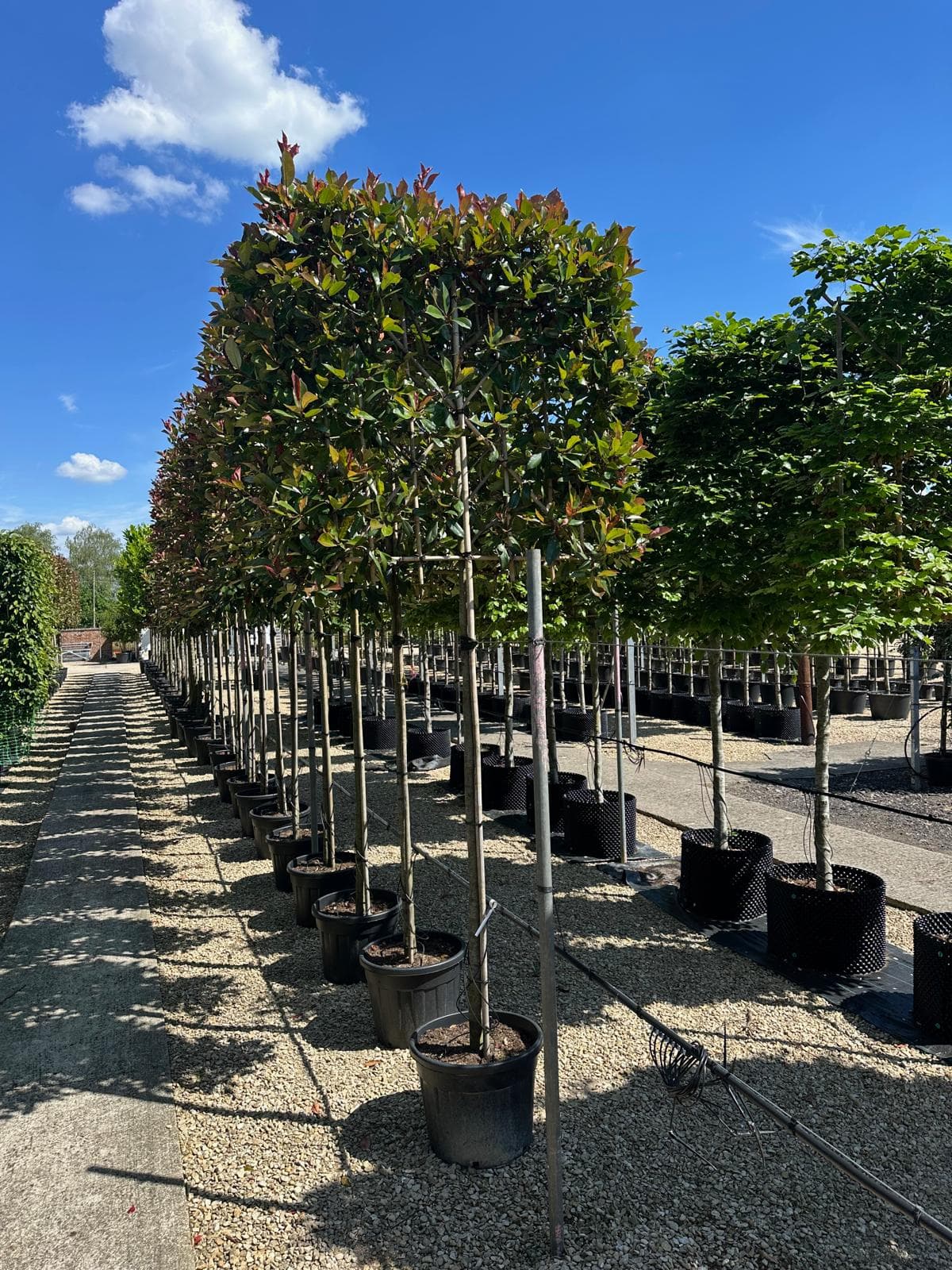
Bamboo is by far the most widely used material for pleached framework. The advantage bamboo has over all other material is it has a high compressive and tensile strength, it is lightweight, easily available and therefore cost-effective. Being a natural product, it is also better for the environment. Bamboo quickly turns a silvery/grey colour after a few weeks of being outdoors, blending in with the foliage and branches it supports. Finished frames can be easily altered if necessary and damaged sections replaced with a new piece of cane by a novice gardener. Bamboo does deteriorate over time, but this takes many years and it always outlasts its usefulness. In our experience, a disintegrating frame is a sure sign it has finished its job and the time has come to remove it altogether. Our frames vary in size from 120x120cm all the way up to 220x600cm. It is important to note that while frame sizes dictate the size of the screen, the branches and foliage can often fall outside this area making the screen wider and taller than the frame itself. It is always worth asking what size the screen is (the screen being the actual box size made by the branches) as well as the frame size, as the two can vary quite significantly. With mature pleached trees, the important measurement is the screen size, not the frame size.
Deciduous vs Evergreen Pleaching
Pleaching for deciduous trees
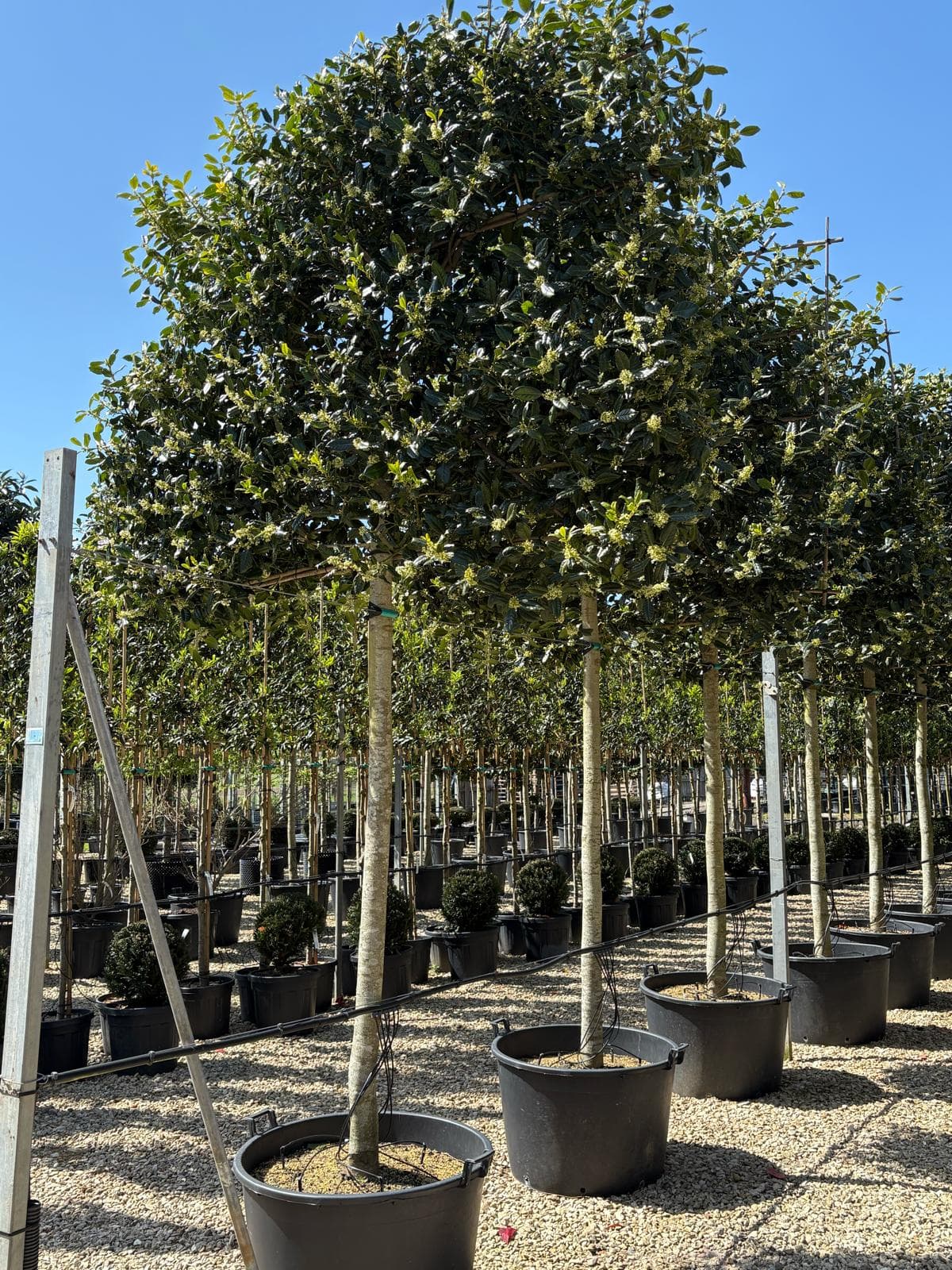
This tends to take place in the winter months as rootballed trees are used in most cases. Deciduous rootball stock is only available between the months of November and April when the sap flow is low, and the trees can be lifted out of the ground. The benefit of training deciduous trees in the winter months is they are free of leaves making the pleaching process of tying the horizontal branches onto the bamboo frame easier and the overall result is neater too. The reduced sap flow allows the young tree to recover more easily and the trees are less stressed as a result. The ancient art of hedge-laying is undertaken in the winter months for this very reason. The best deciduous pleached trees – Mature or Fresh, are made in the winter months from November to April – insist on the best! A much larger proportion of evergreen trees are pleached using plants reared in pots. This is really the only noticeable difference between deciduous and evergreen pleaching. The training techniques are much the same. Evergreen pleached trees and espalier trees are more readily available for year-round sale as a result.
Frame Removal
Finished frames can be easily altered if necessary and damaged sections replaced with a new piece of cane by a novice gardener. Bamboo does deteriorate over time, but this takes many years and it always outlasts its usefulness. In our experience, a disintegrating frame is a sure sign it has finished its job and the time has come to remove it altogether.
Frequently Asked Questions
A freshly pleached tree can be created relatively quickly, but it will take 2-3 seasons to fill out its frame and provide dense screening. A mature pleached tree is typically trained for 3-5 years, with some exceptional specimens trained for 10-12 years or more. The longer the training period, the denser and more impressive the screen.
Pleached trees have branches trained to fill an entire flat plane, creating a dense screen, essentially a hedge on stilts. Espalier trees have branches trained into distinct horizontal tiers with spaces between, creating an architectural framework effect. Pleached trees are primarily for privacy screening, while espalier trees are more decorative.
The most popular deciduous species are Hornbeam (Carpinus betulus) and Common Beech (Fagus sylvatica). For evergreen screening, Yew (Taxus baccata), Portuguese Laurel (Prunus lusitanica ‘Angustifolia’) and Photinia Red Robin (Photinia × fraseri ‘Red Robin’) are excellent choices. Contact us to discuss which is best for your situation.
The frame can typically be removed after 2-3 years once the planting is well established. A disintegrating frame is a sure sign it has served its purpose. However, for freshly pleached trees, the frame is needed for longer as the screen is still developing density.
Simply trim with shears or a hedge cutter once or twice a year, much like any hedge. Regular pruning encourages the screens to thicken and fill out. Espalier trees are maintained by hand with secateurs, removing the previous season's growth to leave only the main lateral branches. Avoid trimming during hot, dry periods.
Popular clear stem heights include 120cm, 150cm, 160cm, 180cm, 200cm and 210cm, determined by the average height of walls and fences. Trees with stems outside these sizes are available too, from low screens starting at 30cm to tall screens beginning at 230cm or more. With freshly pleached trees, exact stem heights can be specified to order.