Taxus × media 'Hicksii'
Pleached Yew Hicksii
Upright columnar yew hybrid with excellent dense growth. More vigorous than Common Yew. Dark green foliage year-round.
or call us directly
01672 861883Product Gallery
Contact us
One of the smallest yews in the family. Dark green needles, a profusion of red berries in late summer and autumn. A slow growing species which requires little maintenance apart from a light clip every so often. Like all yew very hardy as long as it’s not planted in wet ground.
Evergreen
High pleached options
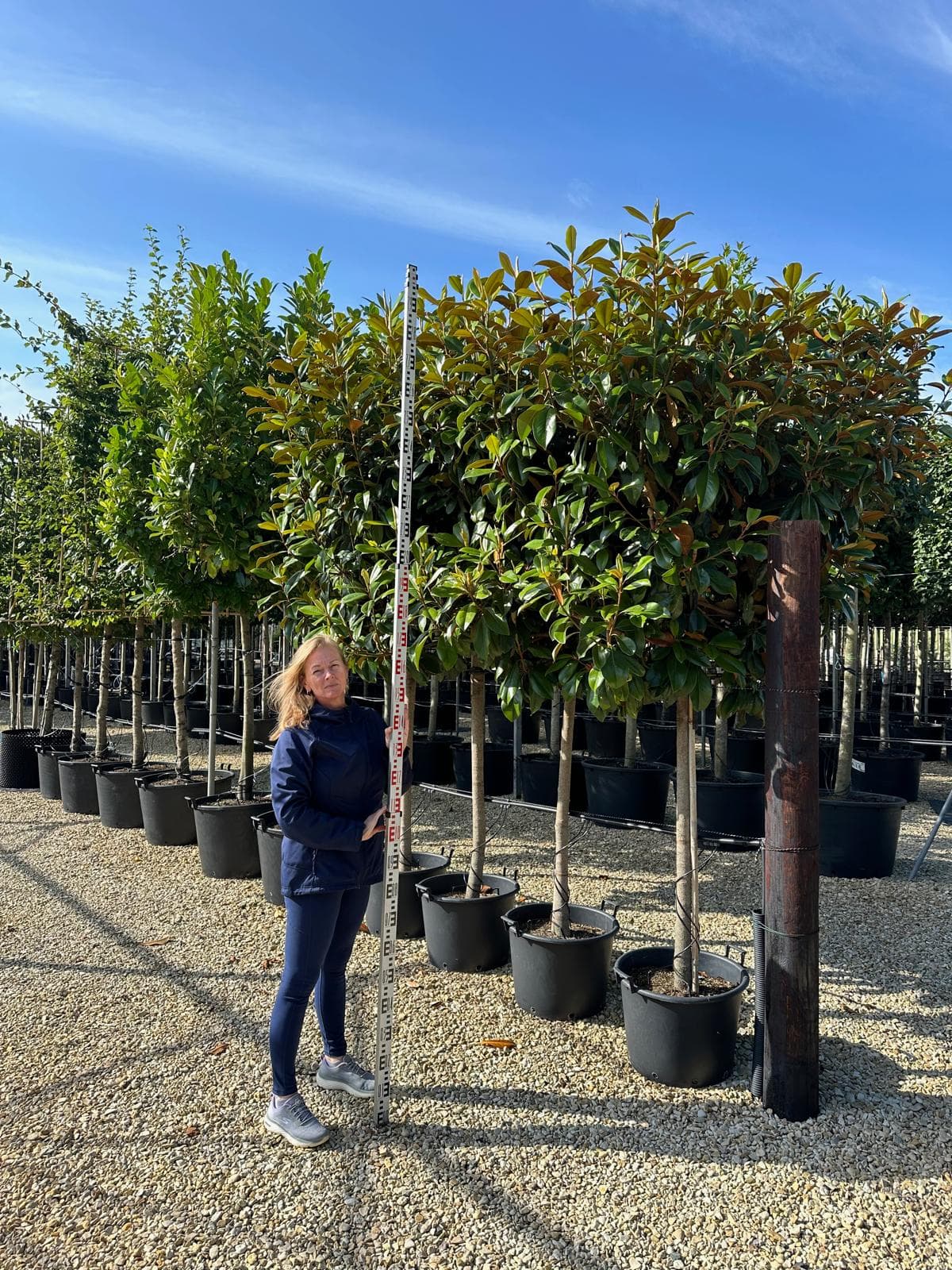
Stem girth from 12-14cm up to 16-18cm, occasionally bigger available but they need booking in advance
Various stem heights and frame sizes available
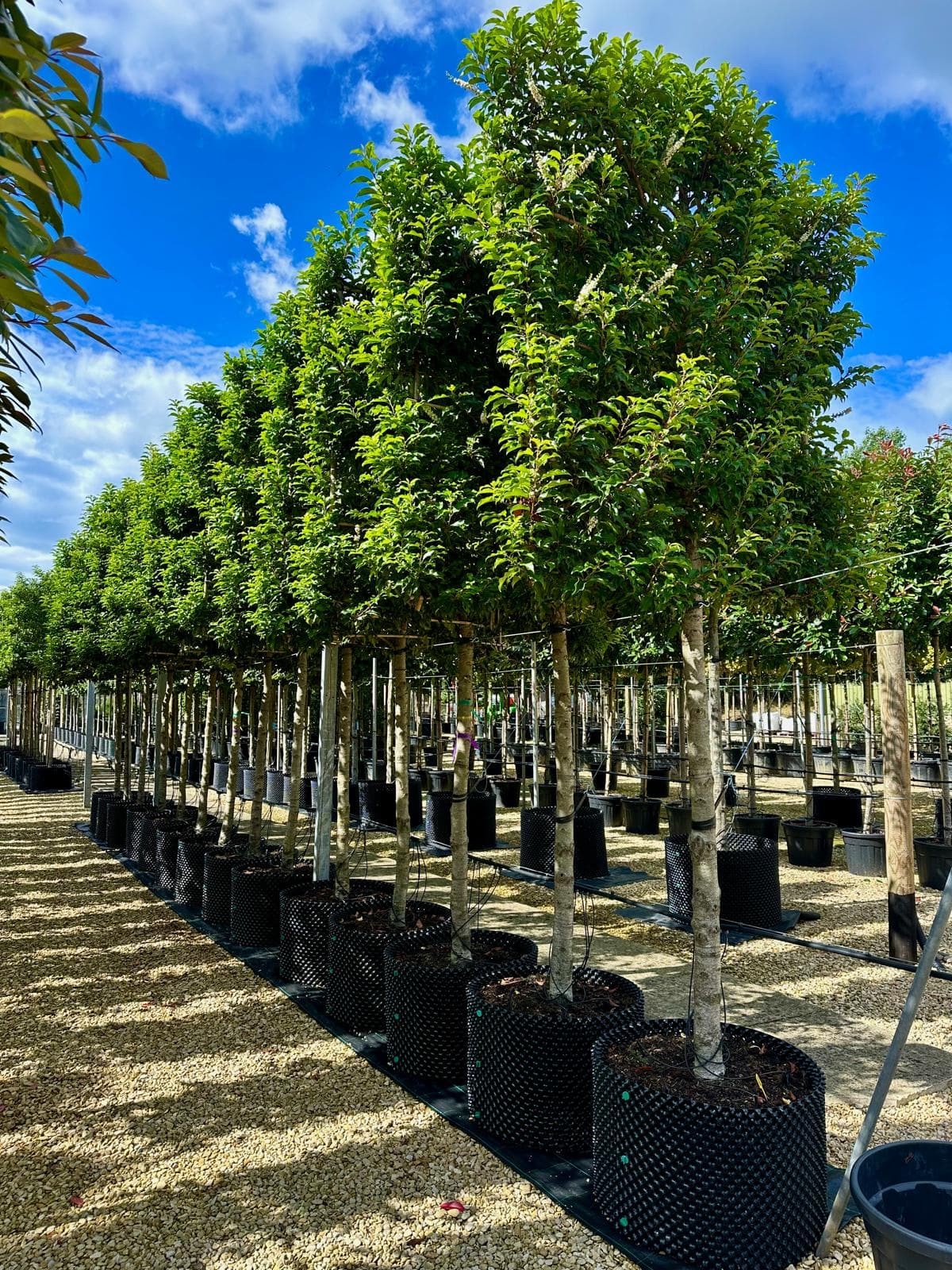
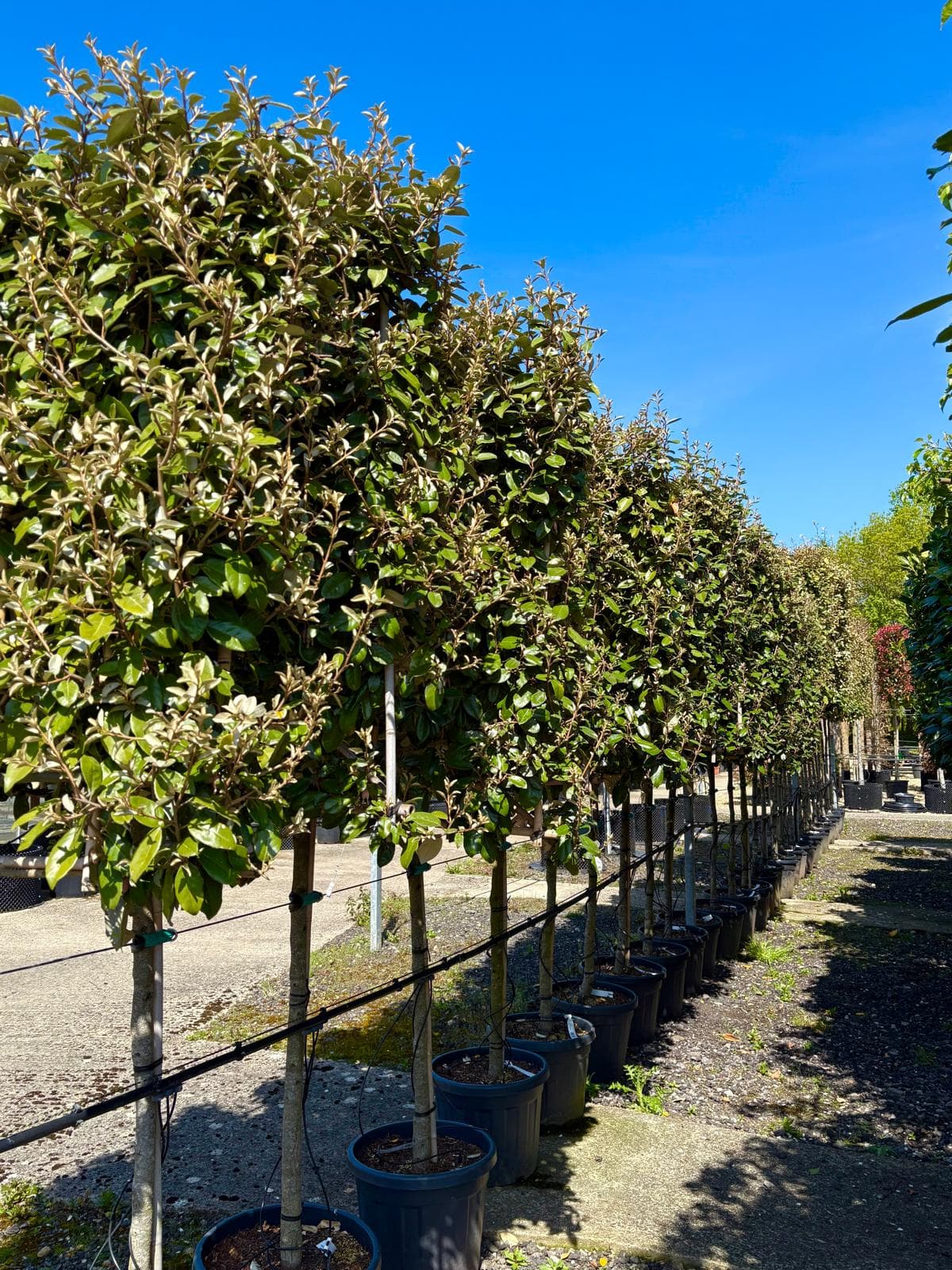
Trained on frame in pleached form for 1-5 years in some cases even longer
Pleached Yew Hicksii is available in pots and containers, cocoa rootball or rootball
Nationwide delivery service by articulated lorry, smaller vehicle by prior arrangement
Browse our current pleached tree stock, selected for structure, form, and maturity
View Stock & PricesYew Hicksii – Taxus x media ‘Hicksii’ (Taxaceae)
The Yew ‘Hicksii’ is a wonderful sophisticated evergreen coniferous tree with a rounded habit. It is one of the smallest species in the genus Taxus with an upright habit, achieving heights on average between 3 and 5 meters. It is densely branched and heavily leaved, even more so than Taxus baccata (English Yew).
Having a compact habit, it is also slower growing than English Yew which makes this plant low maintenance. It grows in a columnar fashion at first, changing to becoming narrow ovoid with age. New twigs and branches are surprisingly strong, brown in colour, while older bark is reddish brown, fibrous and flaky. The dark green needles are slightly longer than those found on the Taxus baccata, but they are also narrower (0.25cm). The female cultivar can bear lots of small red fleshy fruit roughly 0.7cm long which various species of birds thoroughly enjoy feeding on. No part of the plant should be eaten as they are toxic.
For those with equestrian centres, liveries and stables, Yew should not be planted on or near paddock fencing where horses and ponies can feed on them. The same advice is given to farmers with livestock. Planting away from these immediate areas where grazing animals can’t feed freely on the plants is common.
Like all other varieties of Yew, the Hicksii has a high tolerance to drought and as a result it doesn’t like to be planted on wet ground or areas that are subject to flooding. It may die in conditions where the soil beneath the plant is not sufficiently well-drained. It therefore prefers sandy, loamy soil but is will do equally well on clay as long as there is sufficient drainage to prevent the roots sitting in damp ground. A hardy robust plant, capable of living to a very old age with specimens, hundreds of years old not being uncommon. The Hicksii is winter and frost hardy capable of withstanding temperatures to -23 so suitable for gardens in the North of England and Scotland which experience relatively harsh winters. It will happily grow in full sunlight and shadow too and it shows a good resistance to wind.
Suitable for small and large gardens, large containers, roof gardens and industrial areas. Its rather narrow upright habit makes it suitable for specimen solitaire pieces, hedge plants and pleached trees. Available in containers, pots and rootball in season while stocks last.
Taxus baccata topiary from Hedgeworx in the historic coronation ceremony